
*We partner with bada$$ companies that offer products that help our readers achieve their goals! If you purchase through our partner links, we get paid for the referral at no additional cost to you! Please read our disclosure for more info.*
Ask ten people how many continents in the world there are, and you may get three different answers without anyone even trying to be difficult.
One person will say seven.
Another will say six.
Someone else will confidently say five, as if the rest of the room missed a basic geography lesson.
That is exactly why this topic keeps coming up. It sounds like one of those simple school facts that should have one neat answer. You would think the planet is the planet, the land is the land, and the number should be settled forever. But once you look a little closer, you realize this is not really a question about the Earth changing. It is a question about how people divide the Earth.
That is the key.
The world itself does not keep switching between five, six, and seven continents. What changes is the model people use to group the land. Different countries, different school systems, and different traditions teach the continents in slightly different ways. So the confusion is not random. It comes from the fact that more than one classification system exists.
The most commonly taught answer today is seven. That is the version many people learn first, and it is still the one most readers expect when they search how many continents in the world. But that does not mean the five-continent and six-continent models are nonsense. They exist for real reasons, and once those reasons are explained, the whole topic becomes a lot less confusing.
This article is going to break it down in a plain, easy way. We will look at why seven is the most familiar answer, why some people use six, why others say five, what counts as a continent in the first place, and which answer you should use depending on the situation.
The Short Answer First
Let’s start with the answer most people actually need.
If someone asks how many continents in the world, the safest everyday answer is seven.
Those seven are Asia, Africa, North America, South America, Antarctica, Europe, and Australia.
That is the model many English-speaking students grow up learning. It is also the version most people expect in general conversation, basic educational content, and ordinary geography discussions.
But here is where things get interesting.
Some people count six because they combine Europe and Asia into one continent called Eurasia.
Other people count six in a different way by combining North America and South America into one continent called America.
And some count five by grouping the Americas together while using a broader view of the rest.
So if you have ever seen different numbers and wondered which one is right, the honest answer is that the number depends on the system being used. Still, if you want the answer that works best for most readers in 2026, seven is the best one to lead with.
Why This Question Confuses So Many People
At first, this seems like it should be one of the easiest geography questions around.
A continent is a continent, right?
Not exactly.
The problem is that continents are not grouped only by pure physical geography. They are also shaped by history, tradition, education, and the way people have chosen to divide the world over time. That is why the number of continents is not as fixed in people’s minds as the number of oceans or the number of days in a week.
For example, Europe and Asia are connected land. There is no giant ocean fully separating them the way water separates other large land areas. So a lot of people argue that Europe and Asia should be treated as one continent, Eurasia.
Related Article:
Then there is North America and South America. Some school systems teach them as two separate continents. Others treat them as one larger continent called America.
Already, you can see why the answers vary.
People are not arguing because one side knows geography and the other does not. They are often using different ways of dividing the same planet.
That is why this topic can feel frustrating if nobody explains the system behind the answer. A person says seven as if it is obvious. Another says six as if that is obvious. Meanwhile, the real issue is that both are relying on different models without saying so.
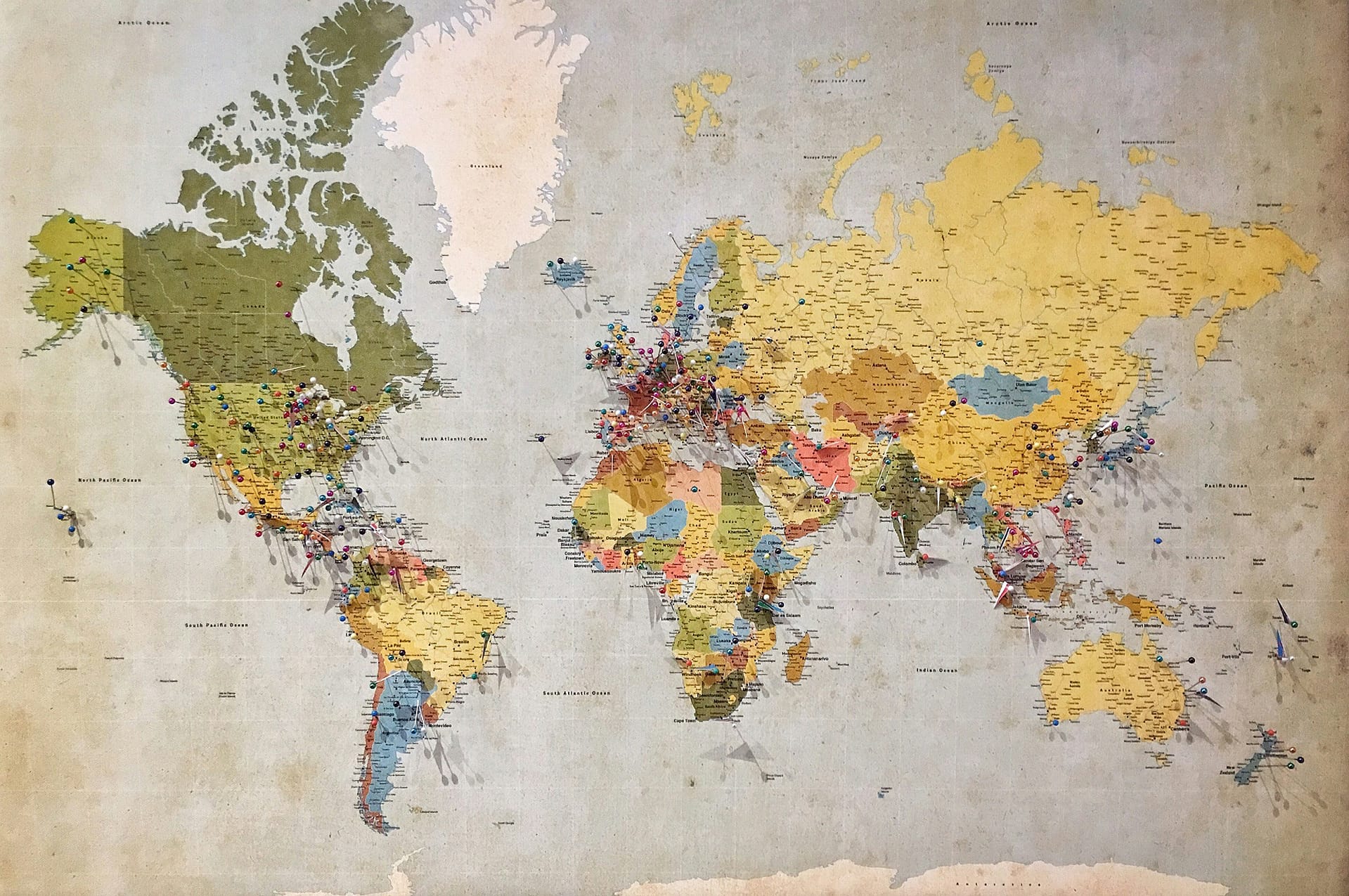
What Is a Continent, Really?
Before you can answer how many continents in the world, you need a basic idea of what a continent actually is.
That sounds obvious, but it matters more than most people think.
A continent is generally understood as one of the world’s major land divisions. That sounds simple enough. But once you try to draw the boundaries precisely, things get messy. Some divisions are clear. Antarctica is easy to separate. Africa is fairly easy to identify. Australia also stands apart clearly in many models.
But then you reach the big connected landmass that includes Europe and Asia, and the clean simplicity disappears.
So the idea of a continent is partly physical and partly traditional. Physical geography matters, of course, but so does the long history of how humans have described the world. That is why continents are not defined only by water boundaries or land connections. They are also influenced by the way societies have chosen to organize maps and teach geography.
This is where a lot of confusion begins. People assume continents must be purely natural categories. In reality, they are partly natural and partly cultural.
Once you understand that, the 5, 6, or 7 debate starts making much more sense.
The 7 Continents Model
The 7 continents model is the one most people know best.
In this system, the world is divided into Asia, Africa, North America, South America, Antarctica, Europe, and Australia.
This model is popular because it is easy to teach and easy to remember. It gives each major region its own clear label, and it matches the way many school systems have organized geography for generations.
For a lot of people, this is simply the normal answer. It is what they learned first, what they saw in school maps, and what they still think of when someone asks how many continents in the world.
There is also a kind of balance to this model that makes it stick in people’s minds. Africa is its own continent. Antarctica stands alone. Australia is clearly separated. North America and South America are treated as distinct. Europe and Asia remain separate because of long historical tradition.
That last part is important.
Europe and Asia are physically connected, but the seven-continent model still treats them as separate. That is not because the Earth itself demands it in a simple way. It is because people have been taught to think of Europe and Asia as distinct world regions for a very long time.
So while the seven-continent model is the most familiar, it is also partly a result of history and habit, not just raw geography.
Why Seven Is the Most Common Answer
If more than one system exists, why does seven usually dominate?
Because it is the most widely taught version in many parts of the world, especially in English-speaking education. It is also the answer most general readers expect to hear. If you are writing for a broad audience, using seven first helps the article feel familiar and clear.
There is another reason too. The seven-continent model fits the way many people already think about global regions. Europe is often discussed separately from Asia in politics, history, and culture. North America and South America are often treated as separate parts of the world in media, education, and everyday conversation. That gives the seven-continent model extra staying power.
It feels natural to people because it lines up with the way the world is commonly discussed.
That does not automatically make it more scientifically perfect than every other model. It just makes it more accepted in everyday use.
So if your goal is clarity, readability, and giving readers the answer they are most likely expecting, seven is the best starting point.
The Problem With Europe and Asia
Now let’s get to one of the biggest reasons this debate exists at all.
Europe and Asia are one connected landmass.
That is what makes the seven-continent model feel a little strange to some people. If continents are supposed to be separate major land divisions, why are Europe and Asia counted separately when they are physically joined?
That question is fair.
The answer is mostly historical. Europe and Asia have long been treated as different world regions for cultural, political, and historical reasons. Over time, that division became deeply rooted in education. So even though the land is connected, the tradition of calling them separate continents became standard in many places.
This is why some people push back against the seven-continent model. They feel that if connected landmass matters, Europe and Asia should be combined into one continent called Eurasia.
And honestly, that argument is not unreasonable at all.
It is one of the strongest reasons the six-continent model exists.
The 6 Continents Model With Eurasia
One version of the 6 continents model combines Europe and Asia into Eurasia.
In this system, the continents become Africa, Eurasia, North America, South America, Antarctica, and Australia.
This model appeals to people who want the continent count to reflect connected land more consistently. Since Europe and Asia are physically joined, grouping them together feels more logical from that point of view.
It also removes one of the oddest parts of the seven-continent model. Instead of pretending Europe and Asia are clearly separated by nature, the Eurasia model treats them as one large landmass.
That can feel cleaner and more consistent.
But it also opens another question.
If Europe and Asia should be one continent because they are connected, then why not combine North and South America too?
That is where another version of the six-continent model comes in.
The 6 Continents Model With America
There is a second way people arrive at 6 continents.
Instead of combining Europe and Asia, they combine North America and South America into one continent called America.
That creates a list like this: Africa, Antarctica, Asia, Europe, America, and Australia.
For people raised with this way of thinking, the Americas are one large continental unit. North and South are seen more as subdivisions than fully separate continents.
This approach is common enough that many people grow up never finding it strange at all. To them, the idea of dividing America into two continents can feel just as arbitrary as separating Europe and Asia feels to someone else.
That is one of the most interesting things about this topic.
People often assume their own geography lessons were the one obvious truth. But once you see how other systems work, you realize the world has been taught in more than one way all along.
So when someone says six, you actually need to know which six-continent model they mean.
Are they merging Europe and Asia into Eurasia?
Or are they merging North and South America into America?
Both versions exist.
The 5 Continents Model
Now let’s talk about the 5 continents model.
This one surprises many people because they assume five must be a mistake. It is not.
In the five-continent view, the world is often grouped as Africa, the Americas, Asia, Europe, and Oceania. In other words, North and South America are treated as one larger continent, while the Pacific region is usually grouped more broadly as Oceania rather than simply Australia.
This model shows up in symbolic and educational traditions, and it has been familiar to many people around the world for a long time.
When people hear about five continents, they often think someone forgot Antarctica. But in many five-continent systems, the focus is on the major inhabited continental groupings people commonly discuss, rather than on the exact same division style used in the seven-continent model.
That is why five is not just some random wrong answer.
It comes from a real way of grouping the world.
Why the Americas Are Sometimes Counted as One
The question of North America and South America is almost as important as the Europe and Asia issue.
Why do some people count them separately while others combine them?
Because both approaches have logic behind them.
On one hand, North America and South America are often treated as separate continents because they differ in size, history, and regional identity. In the seven-continent model, splitting them feels natural because it matches the way many people already talk about the world.
On the other hand, they are also connected, and many traditions prefer to see them as one larger continental body, America. In that view, North and South are regions within a single continent rather than two separate continents.
Neither approach appears out of nowhere. Both come from long-standing ways of organizing world geography.
So when someone says there are five or six continents and includes America as one, they are not inventing their own geography. They are using a recognized model.
Australia or Oceania?
This is another point where readers sometimes get mixed up.
In the seven-continent model, Australia is usually listed as the continent.
But in broader regional language, people often say Oceania, which includes Australia along with many Pacific islands.
That difference can confuse people because they think one of the terms must be wrong. In reality, they are often being used in slightly different ways. Australia is the continent in the classic seven-continent model, while Oceania is a broader regional term that includes Australia and nearby island groups.
That is why a five-continent model might say Oceania instead of Australia. It is using a wider regional grouping rather than the narrower continent label many students learn in school.
This is another good example of how geography is not always as tidy as it first appears. The words people use depend a lot on context.
Why There Is No Single Universal Answer
This is the part many readers do not expect.
There is no one worldwide rule that forces every school, country, and tradition to count continents exactly the same way.
That may sound frustrating, but it is true.
The Earth itself does not hand us a little official card that says, “There are exactly this many continents and no other model is allowed.” Humans created the categories. Humans drew the groupings. Humans taught the systems. That means different systems can exist at the same time.
That is why the answer to how many continents in the world is not just a number. It is a number plus a method.
If your method is the standard school model used by many English-speaking readers, the answer is seven.
If your method combines Europe and Asia, the answer may be six.
If your method combines the Americas, the answer may be six or even five depending on the broader structure.
So the smartest way to answer the question is not to act like one number fell from the sky. It is to explain why the numbers vary in the first place.
Which Answer Should You Use?
For most writers, students, and everyday readers, the best answer to use is seven.
Why?
Because it is the most familiar, the most expected, and the easiest to understand in general use. If someone lands on a blog with the title how many continents in the world, they are usually looking for the standard answer first. Seven gives them that.
But a good article should also explain that other systems exist.
That way, the reader gets both clarity and context.
So the best practical approach is this:
Lead with seven.
Then explain that six and five come from alternate models that group landmasses differently.
That is the cleanest, most useful answer.
Why This Debate Still Matters
At first glance, this may feel like a tiny schoolbook debate that does not matter much in real life.
But it actually matters more than people think.
This question shows up in classrooms, search results, trivia games, travel conversations, general knowledge content, and educational websites all the time. And because readers often expect one neat answer, they get confused the moment they see another number somewhere else.
That confusion can make even a simple topic feel frustrating.
A clear explanation helps people understand that different answers do not always mean someone is lying or making things up. Sometimes it just means the source is using a different geographic tradition.
That matters because good information is not only about giving the answer people expect. It is also about showing them why other answers exist.
Common Mistakes People Make
One common mistake is assuming seven is the only possible answer and everyone else must be wrong.
That is not true.
Seven is the most common answer for many readers, but it is not the only system people use.
Another mistake is assuming five or six are always mistakes. They are not. They often come from legitimate classification models that combine certain landmasses differently.
A third mistake is thinking continents are defined only by physical separation. Physical geography matters, but so do history, education, and tradition.
And the last mistake is answering the question with just a number and no explanation. That is exactly how confusion keeps going. If you only say seven, without explaining why some people say six or five, the reader may leave thinking one of the answers they have seen elsewhere must be fake.
A better answer gives the reader the logic behind the numbers.
The Easy Way to Remember It
If you want a simple way to keep all this straight, think of it like this.
Seven is the standard answer most people expect.
Six usually appears when one big land connection is grouped together, either Europe with Asia or North America with South America.
Five appears when the Americas are grouped together and the world is divided more broadly.
That little framework makes the whole topic much easier to remember.
You do not need to memorize a hundred map theories. You just need to understand that different systems divide the same planet in different ways.
So, How Many Continents Are There?
Let’s bring it back to the question.
If someone asks how many continents in the world, the best everyday answer is seven.
That answer works for most readers, most general educational settings, and most normal conversations.
At the same time, six and five are not nonsense answers. They come from real classification systems that group Europe and Asia, or North and South America, in different ways.
So the real answer is this:
The most commonly taught answer is 7 continents.
But depending on the model being used, people may also count 6 continents or 5 continents.
That is why different answers exist, and that is why the debate never fully goes away.
Final Thoughts
This question sounds simple until you realize it is not only about land. It is also about how humans choose to divide and describe the world.
That is why how many continents in the world keeps producing more than one answer.
The planet has not changed.
The maps have not become chaos.
People have just inherited different ways of grouping the same major land areas.
So if you want the answer that works best in 2026, go with seven first. That is the clearest and most familiar response for most readers. Then, if needed, explain that five and six come from alternate continent models that are still widely known in different parts of the world.
Once you know that, the whole question stops being confusing.
It becomes what it really is: not a mystery, but a matter of classification.

Hi, I’m Bruno. I’ve worked in the aviation industry for over 6 years as a B1.1 Licensed Aircraft Maintenance Engineer. This blog is where I share insights on aviation and travel globally.