
If you have ever searched for a flight, closed the tab, searched again later, and watched the price jump, you are not imagining it. Flight pricing can change quickly.
Sometimes it is because a cheaper fare sold out. Sometimes a promo ended. Sometimes the site is showing a slightly different total based on your location, currency, or what it thinks your market is.
That is where the VPN idea comes in.
A VPN can make it look like you are browsing from a different country or city. In some cases, that can unlock different prices, different taxes, different currencies, or a different “point of sale” version of the fare. In other cases, it does absolutely nothing.
This guide shows you what is real, what is hype, and how to do the process step by step so you can test it fast and book with confidence.
What flight pricing really is, and what it is not
Airfare is not priced like a regular retail product. Airlines do not tag one price and leave it.
Most airline fares are driven by revenue management and fare buckets. Think of it like this: the airline sells a limited number of seats at each price level. When the cheaper buckets sell out, the next bucket is more expensive. That is why two people can sit next to each other and pay wildly different prices.
A VPN cannot magically bring back a cheap fare bucket that is already gone.
But the booking site you use can change what you see. That is where the VPN can sometimes matter.
Dynamic pricing vs inventory pricing
People call everything “dynamic pricing,” but there are two separate things happening.
Inventory based pricing
Prices change because cheaper fare buckets sell out, or because demand spikes, or because the airline adjusts inventory.
This is the most common reason prices rise.
Market and point of sale pricing
The same flight can be offered at a different total depending on where you are buying from, which currency you are using, or which market the fare is filed for.
This can be influenced by exchange rates, local taxes, local competition, and regional promotions.
A VPN can sometimes help with this second category.
The biggest myths about getting cheaper flights with a VPN
Let’s clear the air so you do not waste time.
Myth 1: A VPN always makes flights cheaper
Reality: Sometimes it does, sometimes it does not. It depends on the airline, route, booking platform, and whether point of sale differences exist.
Myth 2: Airlines raise prices because they see you searching
Reality: The biggest swings are usually inventory changes and demand, not personal targeting. That said, cleaning up your browsing session helps you compare consistently.
Myth 3: If you find a cheaper VPN price once, you can repeat it forever
Reality: Some cheaper prices come with different baggage rules, different refund rules, or payment hurdles. You must verify the final total at checkout.
Myth 4: There is one “cheapest country to book flights”
Reality: There is no universal best country. Results vary by route, airline, and market.
When using a VPN can actually lower the price
You are most likely to see a difference in these scenarios:
- International routes where airlines have strong local market pricing
- Routes with heavy competition from local carriers
- Bookings through online travel agencies that show different totals by currency or market
- Trips where the base fare is similar everywhere, but taxes or service fees vary by point of sale
- Promotions that appear on one country version of a site but not another.
When a VPN usually will not help
- If you are booking a simple domestic route in a stable market, prices are often consistent.
- If the fare bucket is selling out in real time, prices may rise everywhere.
- If the website blocks VPN traffic, you may not reach the booking screen.
- If the checkout requires a local payment method or residency, you might not be able to complete the purchase.
A quick note on terms and staying smart
VPNs are normal privacy tools. Many people use them daily. Still, some travel sites do not love location manipulation, and some fares are intended for residents of specific countries.
This guide is about testing publicly available prices across different point of sale versions and currency displays. If a fare explicitly requires residency or a local ID, do not force it. Focus on fares you can legitimately purchase and ticket.
Your pre-flight search checklist
If you want to maximize your odds, control variables like you are running a quick experiment.
- Pick one exact flight scenario: same route, dates, passenger count, cabin.
- Choose where you are checking: airline site, agency site, or both
- Get a baseline price without a VPN
- Write down the baseline including currency, baggage inclusion, and refund rules
Now you are ready to test.
Step-by-step: how to get cheaper flights with a VPN
Step 1: Start with a clean browsing session and a Greap VPN
Open an incognito or private browsing window. This reduces the influence of stored cookies and past sessions.
If you want a cleaner test, clear cookies and cache for the travel sites you are using. The goal is consistency, not paranoia. Also ensure to choose a great VPN. I personally recommend using NordVPN for much better results.
Best VPNs to get cheaper flights in 2026
- NordVPN – overall best VPN for cheaper flights
- Surfshark – reliable VPN to book flights
- Proton VPN – excellent VPN with servers in the cheapest countries
Step 2: Pick smart VPN locations to test
Do not randomly test 30 countries. Start with a focused list.
A strong starter set is:
- Your home country for baseline
- The country you are departing from
- The country you are flying to
- One nearby country in the same region
- One or two countries known for competitive travel pricing and big travel markets
If you are flying US to Mexico, test US, Mexico, Canada, and possibly one European location if the airline has strong European point of sale pricing.
If you are flying to Europe, test your home market plus a few European markets where the airline is based or where competition is intense.
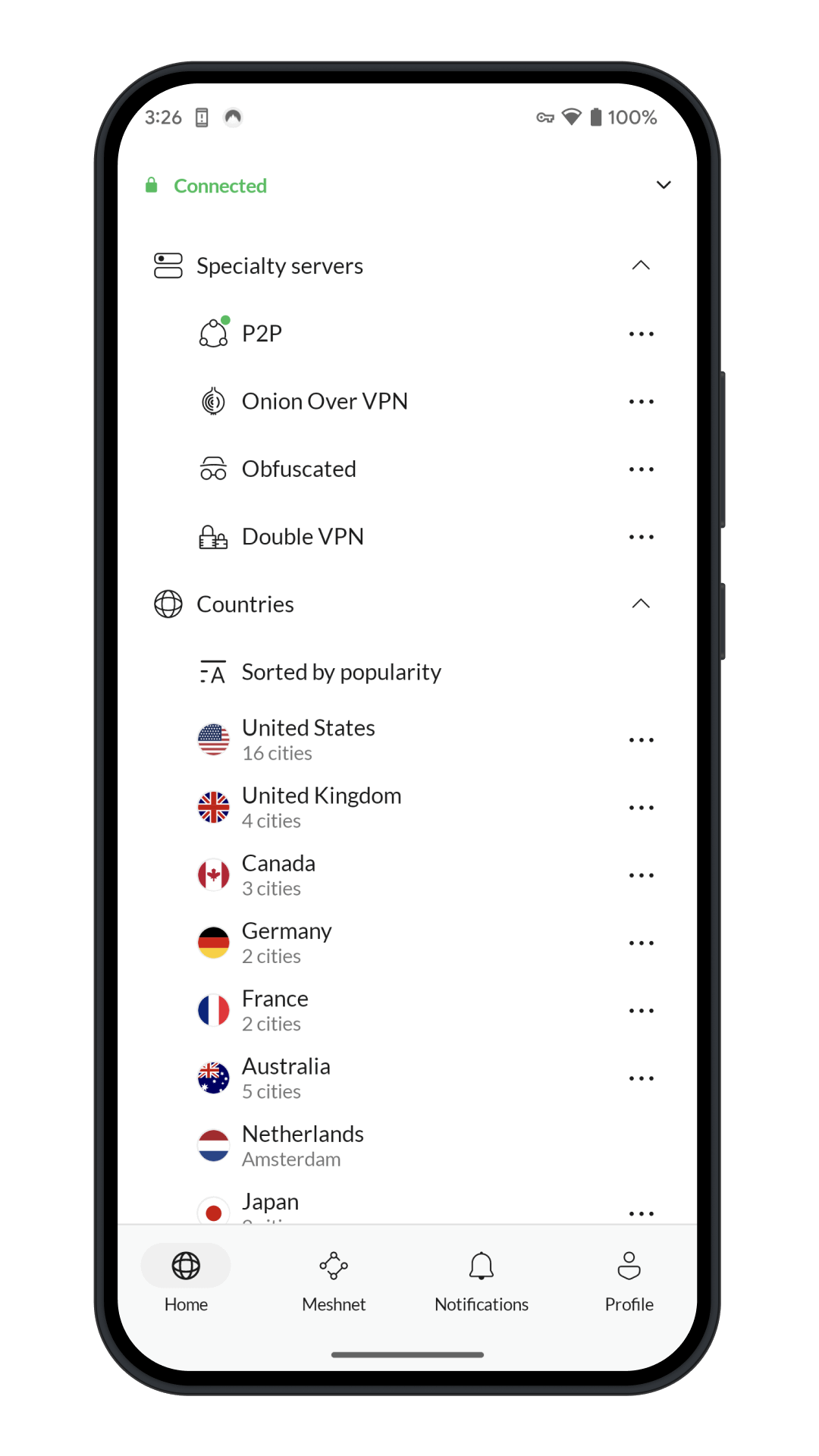
Step 3: Turn on the VPN and refresh everything
Connect to your chosen server, then close and reopen the incognito window. This helps reduce leftover session fingerprints. I recommend using NordVPN for this as it offers the best pricing with great connectivity.
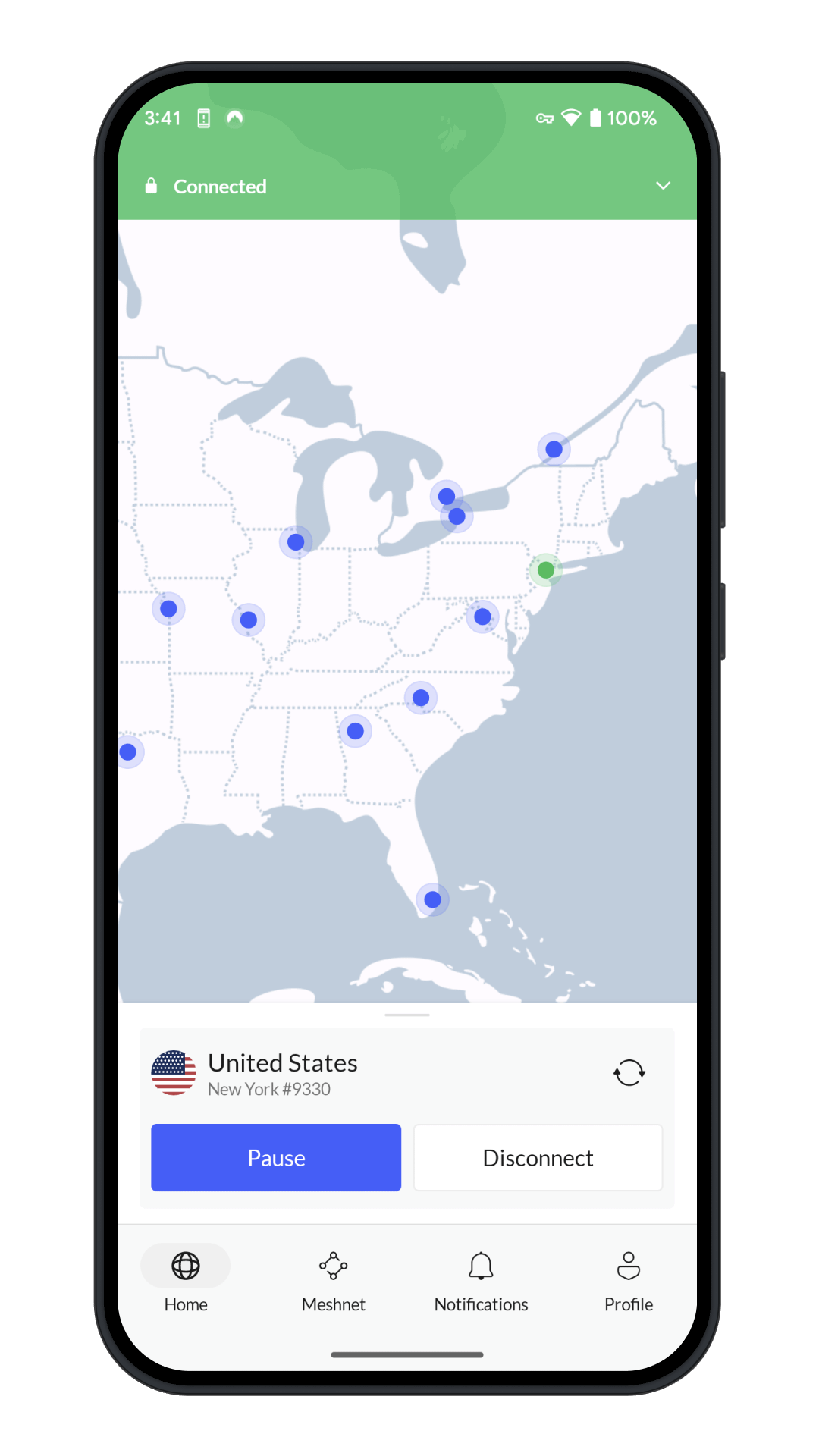
Also check whether your browser language or your site settings are forcing a “home country” version of the site. Some sites push you back into your market unless you change the country selector manually.
Step 4: Search the exact same flight again
Use the same dates, route, cabin, passengers.
Compare carefully, not just the headline price:
- Is the currency different
- Are the taxes and fees different
- Is baggage included or excluded compared to baseline
- Are the fare rules different
- Are you being shown a different fare brand or bundle
You can also use the Kiwi website to find amazing flight deals.
[the_ad id=”1076″]
Step 5: Repeat for your test countries, but keep it controlled
Change only one thing at a time: VPN location. Everything else stays the same.
Keep notes. A simple notes app works. You are looking for patterns.
Step 6: When you find a lower price, compare direct vs agency
If you found a cheaper price on an agency site, check the airline site. If you found it on the airline site, check one reputable agency.
Sometimes the “cheaper” number is just a currency conversion difference. Sometimes it is a real point of sale fare.
You can use the tool below to compare the prices:
[the_ad id=”1076″]
Step 7: Confirm the final total and ticketing details
Before you celebrate, verify:
- Final total after all taxes and service fees
- Baggage cost and seat selection cost
- Cancellation and change rules
- Payment acceptance for that market version of the site
- Whether you get a valid ticket number quickly after purchase
If the final total is not truly lower, it is not a win. Move on.
Why flight prices can differ by location
If you are wondering why a flight could be cheaper from another country’s website, here are the most common reasons.
Currency rounding and exchange rate differences
A small currency difference can turn into a meaningful saving on expensive tickets.
Local taxes and market fees
Some taxes or service charges vary depending on the point of sale.
Local competition and airline strategy
Airlines sometimes price more aggressively in markets where customers have more alternatives.
Point of sale fare filing
Certain fares are filed for specific markets and appear only in those country versions.
Agency service fees and markups
Some agencies add different service fees depending on the country version of the website.
What to do when a site blocks your VPN
This happens. It does not mean the approach is dead.
- Try a different server in the same country
- Try a nearby country with a similar market
- Slow down your searches, rapid searches can trigger bot detection
- If your VPN offers obfuscation or anti-detection modes, try them. NordVPN is the best VPN provider out there so try using their servers instead.
- Use mobile data as a baseline comparison if your Wi-Fi is causing issues
Also, do not panic if you see more CAPTCHAs. That is common when you switch locations often.
Payment and currency tips so you do not lose the savings at checkout
Finding a lower price is only half the game. The other half is keeping it lower.
Watch for foreign transaction fees
If your card charges foreign transaction fees, your “deal” may vanish.
Avoid dynamic currency conversion
Some sites offer to charge you in your home currency. Often the exchange rate is worse. Paying in the local currency can be cheaper if your bank rate is fair.
Pay attention to billing requirements
Some foreign versions of booking sites ask for a local billing address format. That does not always block you, but it can create friction.
When the price difference is small, booking direct is often worth it
If a third party is only slightly cheaper, booking direct can be better for changes, support, and fewer headaches.
How to use a VPN for flight booking without wasting your whole day
If you want the biggest return on your time, focus your VPN tests on high-impact trips.
- Long-haul international flights
- Family travel where you are buying multiple tickets
- Multi-leg or multi-city itineraries
- Holiday travel when prices swing aggressively
For a short cheap domestic flight, your time is often better spent on flexible dates, nearby airports, and fare alerts.
The best “stack” to maximize savings
A VPN works best when you combine it with other proven tactics.
Flexible dates
If you can shift by even one day, that often beats any VPN trick.
Nearby airports
In many regions, changing airports saves more than any location-based pricing difference.
Fare alerts
Track the route, then when you see a dip, run a quick VPN test across your strategic countries and buy if the total is truly lower.
Stopover flexibility
Nonstop is convenient. One stop can save a lot, especially on expensive routes. Just avoid risky tight connections.
Points and miles
Sometimes the best deal is not cash. If cash pricing is ugly, check points options.
How to choose a VPN that is actually good for flight booking
If you are picking a VPN specifically for travel and booking, you do not need the most complicated tool. You need a VPN that does a few things really well.
Strong server coverage
You want many countries and multiple servers per country. This matters when a site blocks one server.
Fast, stable connections
Flight sites can be heavy. Slow VPN speed makes the process miserable.
Reliable apps on laptop and phone
Many people search on laptop and book on mobile, or the other way around. You want both to work smoothly.
Easy server switching
If it takes forever to switch countries, you will quit.
Security basics for travel
A kill switch and solid encryption matter, especially on public Wi-Fi.
Optional anti-detection features
Not mandatory, but useful if you often run into VPN blocks.
And the one VPN that checks off all these boxes is NordVPN. It is the one I personally use when finding cheaper flights to my vacation destinations.
Three “VPN styles” to match to your travel personality
Instead of pretending there is one perfect VPN for everyone, I prefer matching the tool to the traveler.
The frequent traveler who uses public Wi-Fi often
Prioritize security, stable mobile performance, and fast connections.
The deal hunter testing many markets
Prioritize server coverage and easy switching. More server options means more useful testing.
The family planner who wants simple and reliable
Prioritize ease of use, multi-device coverage, and customer support. You want fewer tech headaches.
Many well-known VPN providers fit these categories. Compare plans, look for long-term discounts, and choose a provider with a strong reputation and clear policies.
A realistic example of the method in action
Let’s say you are booking Los Angeles to Paris.
You search normally and get a baseline in USD.
You open incognito, connect your VPN to France, then search again. You might see pricing in EUR and a different total.
You test one or two nearby European markets because airlines sometimes file slightly different fares across markets.
You do not assume the lowest headline number is best. You go to checkout and compare final totals, rules, and baggage.
If the foreign currency price is lower, you check foreign transaction fees and avoid bad currency conversion options.
If you get a valid ticket number and the rules look normal, you book. If not, you move on.
That mindset keeps this method useful and prevents it from becoming an endless rabbit hole.
Common pitfalls and how to avoid them
You see a lower price but it disappears at checkout
Always compare final totals, not headline numbers.
You forget baggage and seat costs
A cheaper ticket that charges extra for everything can end up costing more.
You find a fare you cannot pay for
Some point of sale fares require a local payment method. Do not build your plan around a fare you cannot ticket.
You test endlessly
Set a time limit. Test four to six strategic locations. If nothing changes, stop and use other tactics.
You book with a sketchy third party for tiny savings
If savings are small, booking direct is often worth it for peace of mind.
Why a VPN is useful even when it does not lower flight prices
Even if you never save a dollar on airfare, a VPN is still valuable for travelers.
- It protects your data on public Wi-Fi like hotels and airports.
- It reduces tracking across sites.
- It adds a privacy layer when you are traveling on unfamiliar networks.
So even if the flight pricing trick only works sometimes, a VPN can still be a smart tool to have.
Final thoughts on cheaper flights with a VPN
Using a VPN to find flight deals is not a guaranteed hack. It is a smart experiment.
When it works, it usually works because of point of sale pricing, currency differences, and market-specific fare rules, not because an airline is personally targeting you.
Keep your process controlled. Test a small set of strategic locations. Always compare final totals and fare rules. If it is truly cheaper and ticketing looks normal, book confidently.
FAQs
1) Can a VPN really get cheaper flights?
Sometimes, yes. A VPN can help you access different point of sale pricing or currency displays. Savings are not guaranteed.
2) What is the best country to set my VPN to for flight deals?
There is no single best country. Start with your home country, the departure country, the destination country, and one or two nearby markets.
3) Should I clear cookies before searching flights?
It helps with consistent comparisons. Private browsing is a good start. Clearing cookies can help further.
4) Do airlines track my searches and raise prices?
Prices often change because fare buckets sell out or demand changes. Tracking can influence what you see on some sites, but it is not the main driver.
5) Is it safe to book flights from another country’s website?
It can be, as long as you confirm the site is legitimate, the final total is correct, and you receive a valid ticket number quickly.
6) Will my card work if I book in a foreign currency?
Usually yes, but watch foreign transaction fees and avoid bad currency conversion options at checkout.
7) Why does the price change when I switch VPN locations?
It can be due to currency conversion, taxes, local competition, or point of sale fare rules.
8) What if a site blocks my VPN?
Try another server, slow down your searches, test a nearby country, or use any anti-detection features your VPN provides.
9) Should I book through an agency or directly with the airline?
If savings are small, booking direct is often better for changes and support. If savings are big and the agency is reputable, it can be worth it.
10) Does a VPN help with hotel prices too?
Sometimes. Similar point of sale and currency differences can apply, but results vary by platform.
11) How many VPN locations should I test?
Start with four to six strategic locations. If nothing changes, stop and use other strategies like flexible dates and nearby airports.
12) What VPN features matter most for flight booking?
Server coverage, speed, easy switching, reliable apps, and optional anti-detection modes are the most useful features.

Hi, I’m Bruno. I’ve worked in the aviation industry for over 6 years as a B1.1 Licensed Aircraft Maintenance Engineer. This blog is where I share insights on aviation and travel globally.