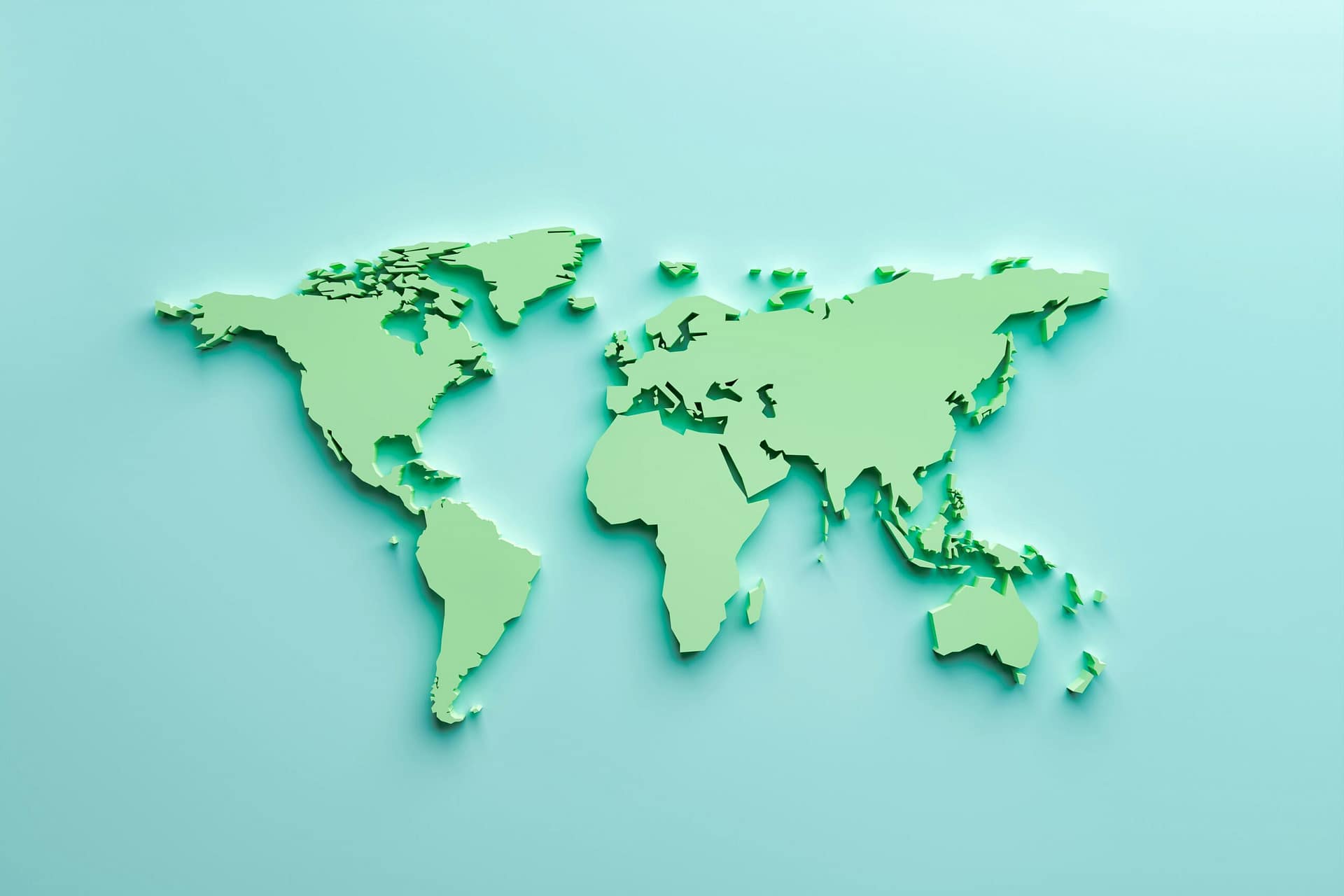
Type how many countries in the world in 2026 into a search bar and you will see something funny happen almost immediately.
You do not get one clean answer.
You get a mess.
One page says 193. Another says 195. Someone else says 197 like they are absolutely sure. A quiz app throws in its own version. By the time you have checked three sources, a simple question starts feeling weirdly complicated.
That is exactly why this topic keeps coming up year after year.
People assume there must be one official number that everybody agrees on. But the truth is a little more layered than that. There is a widely accepted answer, and then there are a few other answers that show up because people are counting different things in different ways.
So let’s clear it up properly.
If you want the most widely accepted answer to how many countries in the world in 2026, the best answer is 193. That is the number of UN member states. The United Nations says it has 193 member states, and for most everyday purposes, that is the figure people use.
The United Nations also recognizes two non member observer states, the Holy See and the State of Palestine, which is why some sources use 195 instead.
That one detail explains most of the confusion.
This article is here to make the whole thing simple. We are going to look at the difference between 193 and 195, why some people use even higher numbers, what “country” really means in practice, and which answer you should use depending on what you are writing, studying, or talking about.
The Short Answer Most People Need
Let’s start with the plain answer first.
When most people ask how many countries are there, they are really asking for the standard global count. In 2026, that standard count is 193 countries, meaning the 193 member states of the United Nations. That is the number most teachers, writers, news outlets, map references, and educational materials rely on.
At the same time, many people also say 195. That number usually includes the 193 UN member states plus the two non member observer states at the UN: the Holy See and the State of Palestine. So 195 is not random. It is just based on a slightly broader way of counting internationally recognized state level entities.
So if you only remember one thing from this article, remember this.
193 is the safest standard answer.
195 is also common, but only when the two observer states are included.
That is the real story.
Why This Question Confuses So Many People
At first glance, this should be one of the easiest geography questions on earth.
A country is a country, right?
Not always.
The problem is that the world does not run on one single universal list that everybody uses in exactly the same way. Politics, international recognition, disputed territories, observer status, and diplomatic relations all affect how some places are counted. That is why the number of countries in the world can look different depending on the source.
Some lists are strict and count only full UN member states.
Some lists include observer states.
Some add partially recognized entities.
Some are built for travel checklists, not diplomacy.
Some are made for trivia games and do not explain their own criteria at all.
That is where people get tripped up. They think one source must be wrong, when in reality the sources are often counting under different rules.
Still, if you want an answer that will not cause trouble in normal conversation, academic writing, or general educational content, 193 is the number that keeps you on solid ground.
Why 193 Is the Standard Answer
There is a reason 193 is the number you see most often.
The United Nations is the biggest and most widely used reference point for country counts. Its membership has grown from 51 original member states in 1945 to 193 member states today. South Sudan became the 193rd member state in 2011, and that total has remained the same since then.
That matters because UN membership is the closest thing the modern world has to a practical international standard. If a place is a UN member state, there is no real debate about whether it belongs on the global country list.
It is in.
That is why countries recognized by the UN carry so much weight in this discussion. People may argue about some territories and political cases around the edges, but the 193 UN members are the stable core almost everyone agrees on.
In other words, if you are answering a school question, writing general web content, preparing a geography lesson, or trying to avoid unnecessary debate, 193 is the cleanest answer.
It is not just common.
It is the standard.
Why Some People Say 195 Countries
Now let’s deal with the number that causes the most confusion after 193.
Why do so many people say 195?
Because they are counting the 193 UN member states plus two non member observer states.
Those two are the Holy See and the State of Palestine. The United Nations identifies them as observer states, which means they are not full members but still hold a recognized status that is different from ordinary territories or regions. That is why some educational websites, world fact pages, and quiz references include them when answering how many countries in the world in 2026.
This is where people often talk past one another.
Someone says there are 193 countries.
Someone else says no, there are 195.
But both may be using a legitimate counting method. They are just using different definitions.
One is counting only full UN members.
The other is counting full UN members plus the two observer states.
If you understand that distinction, the whole debate starts feeling much less dramatic.
The Holy See and the State of Palestine Explained Simply
These two names come up constantly in this topic, so let’s make them easy to understand.
The Holy See is the governing body of the Roman Catholic Church and has long held a distinct diplomatic status internationally. At the United Nations, it is a non member observer state. The State of Palestine also holds non member observer state status at the UN. Palestine received that status through a General Assembly resolution in 2012.
That does not make them full UN member states.
But it does explain why they are treated differently from places that are simply provinces, territories, or disputed regions without similar standing.
This is the reason 195 sounds reasonable to a lot of people. They are not inventing extra countries. They are adding two entities with recognized observer state status.
Still, if the question is being asked in a broad general way and you need one safe answer, 193 remains the better one to lead with because it matches the official UN membership count.
So Where Do Numbers Like 197 Come From?
This is where things get more political.
Numbers above 195 usually appear when people start adding places that have limited recognition, disputed status, or complicated international standing. These are often places that function in some ways like independent states but are not universally recognized as such.
Kosovo is one example. The U.S. State Department notes that Kosovo has been recognized by the United States and by a large number of other countries, but it is not a UN member state. Western Sahara is another example, but the United Nations still lists it as a Non Self Governing Territory rather than a full sovereign state.
This is why some lists stretch beyond 195.
They are not always wrong in a casual sense, but they are definitely moving beyond the standard UN based count. Once you start adding partially recognized or disputed entities, the number depends on which cases you include and which ones you do not. That is why those higher numbers are less stable and less widely accepted.
So yes, you may see 197.
You may even see more than that.
But those counts are based on broader or more controversial criteria, not the standard global reference point most people mean when they ask how many countries are there.
What Actually Makes a Country a Country?
This is the part people often skip, but it matters.
A country is not just a place with a border on a map. In practice, countries are usually expected to have a permanent population, a functioning government, a defined territory, and the ability to engage in relations with other states. On top of that, international recognition matters a lot in the real world.
A place can govern itself in many ways and still run into disputes over status if recognition is limited or contested.
Related Article:
That is why this question is not purely geographic.
It is political too.
You can have places with their own governments, laws, flags, and institutions, but if they do not have broad international recognition or UN membership, many official lists will not count them among the world’s standard country total.
That may feel frustrating if you are looking for a simple answer.
But it also explains why this topic refuses to stay simple.
Why UN Membership Matters So Much
Some people ask why the UN gets treated like the final referee.
The answer is not that the UN literally decides what reality is. The answer is that UN membership provides a widely accepted framework. It gives governments, schools, publishers, researchers, and international institutions a practical standard for counting sovereign states.
Admission to membership happens through a formal process involving the Security Council and the General Assembly, which is why full membership carries so much weight.
Without that standard, every mapmaker, textbook writer, travel blogger, and quiz creator would be working off a different list.
In some cases, they still do.
But 193 remains the anchor because it is the clearest internationally shared baseline.
So when you see the phrase countries recognized by the UN, think of it as the most dependable list available for everyday global counting.
The Difference Between Sovereignty and Recognition
Here is where things get even more interesting.
A place can claim sovereignty.
It can govern itself.
It can hold elections.
It can operate institutions that look very much like those of a state.
But international recognition is a separate issue.
That is why some places exist in a kind of gray zone. Their supporters see them as countries. Their critics do not. Some governments recognize them. Others refuse to. In the middle of all that, public confusion grows.
Kosovo is a good modern example because it is recognized by many states but is still outside the UN membership list. Western Sahara is another complicated case because the UN still classifies it as a Non Self Governing Territory. These examples show why the answer to number of countries in the world can shift once you move away from the official UN member list.
This is also why the “real answer” depends on whether you want the practical answer or the politically expansive one.
For most readers, the practical answer is the one that matters.
That answer is 193.
Has the Number Changed Recently?
Not in the standard UN sense.
The UN membership count has remained at 193 since South Sudan joined in 2011 as the newest member state. So if you are specifically asking how many countries in the world in 2026, there has not been a new UN member added since then.
That is worth saying clearly because some people assume the total changes all the time.
It does not.
Country recognition debates happen. Political disputes continue. Borders can remain sensitive. But the official UN member count has stayed steady.
So if you learned 193 a few years ago and wondered whether it still holds up in 2026, yes, it does.
Why Textbooks, Quizzes, and Websites Give Different Answers
This part can be genuinely annoying.
You open one source and see 193. Then a kids’ geography page says 195. Then a travel forum says 197. Then a classroom worksheet marks one answer right and another wrong without any explanation.
The issue usually comes down to context.
Textbooks often prefer the UN membership count because it is the most defensible and easiest to standardize.
Quiz websites sometimes use 195 because it sounds more complete to a general audience and includes the two observer states.
Travel communities may use even broader counts depending on which destinations they include in “country” checklists.
So the contradiction is not always about bad information. Sometimes it is just about unstated criteria.
That said, a source that gives a number without explaining what it is counting is only doing half the job. A useful answer should tell you whether it means UN member states only, UN members plus observer states, or a broader recognition based count.
That is what separates a helpful explanation from a shallow one.
Which Answer Should You Use in School or Professional Writing?
If you are writing a school assignment, a general article, an educational blog, a business page, or any kind of content where clarity matters, use 193 countries unless your instructor, editor, or project specifically asks you to include the observer states too.
Why?
Because 193 is the most defensible standard answer and aligns with the official count of UN member states.
If you want to sound slightly more complete, you can phrase it like this:
“There are 193 UN member states in the world, or 195 if you include the two UN observer states, the Holy See and the State of Palestine.”
That sentence usually solves the problem neatly.
It is accurate.
It is clear.
And it shows that you understand why different totals appear.
Which Answer Should You Use in Casual Conversation?
In normal conversation, the best answer is still 193, followed by a quick explanation if needed.
If someone says, “I thought it was 195,” you do not need to turn it into a debate. You can simply say that 195 includes the two observer states.
That is it.
You do not need to make it harder than it is.
In fact, one reason this topic feels more confusing online than it does in real life is that people often try to win the argument instead of explaining the counting method.
A simple explanation works better.
Why the Country Count Still Matters in 2026
At this point, some readers might wonder whether this question is even that important.
It actually is.
Country counts show up in schoolwork, travel content, global rankings, sports discussions, diplomacy, NGO reports, business research, geography lessons, exam prep, and all kinds of online writing. If you use the wrong number carelessly, readers notice. And if you use a number without understanding why it varies, you can end up sounding less informed than you intended.
This matters even more in 2026 because people rely on fast search results and short social content for facts. A lot of simple questions get answered too quickly, with no explanation at all. That is how confusion spreads.
So yes, this is a small question on the surface.
But it is also a good example of how global facts are not always as neat as they look.
Common Mistakes People Make With This Question
One common mistake is assuming every territory with a flag is automatically counted as a country.
Not true.
Another is assuming every place with self government is universally recognized as a sovereign state.
Also not true.
A third mistake is treating 193 and 195 as if one must be right and the other must be nonsense. In reality, 193 is the standard answer based on UN membership, while 195 reflects a broader count that includes the Holy See and the State of Palestine.
The final mistake is using bigger numbers like 197 without explaining which additional entities are being counted and why. Once you move into partially recognized or disputed cases, you need to show your criteria. Otherwise the number means very little on its own.
A Simple Way to Remember the Answer
If you want an easy mental shortcut, use this:
Think 193 for the official standard.
Think 195 if someone says “including observer states.”
Anything above that usually means the source is adding disputed or partially recognized entities.
That little framework makes the entire topic easier to handle.
You do not need to memorize every political dispute on the planet just to answer a geography question. You just need to know which counting method is being used.
The Answer in Plain English
So, let’s bring it home.
If someone asks how many countries in the world in 2026, the best standard answer is 193 countries, because that is the number of UN member states. If someone says 195, they are usually including the Holy See and the State of Palestine as the two UN observer states. Higher numbers come from adding entities with limited recognition or disputed status, which makes those counts less universal and more dependent on opinion or political criteria.
And honestly, that is the cleanest way to understand it.
Not by memorizing one random number in isolation.
But by knowing why the numbers differ.
Final Thoughts
Questions like this look simple until you actually try to answer them properly.
That is why so many people leave still confused. They get handed a number, but not the explanation behind it.
Now you have both.
In 2026, the standard answer is 193. That is the official count of UN member states. If you include the two observer states, the total becomes 195. And if you see bigger numbers, it usually means the source is counting disputed or partially recognized entities as countries too.
So the next time someone asks how many countries in the world in 2026, you will not just have an answer.
You will have the right one, with the context that makes it make sense.

Hi, I’m Bruno. I’ve worked in the aviation industry for over 6 years as a B1.1 Licensed Aircraft Maintenance Engineer. This blog is where I share insights on aviation and travel globally.