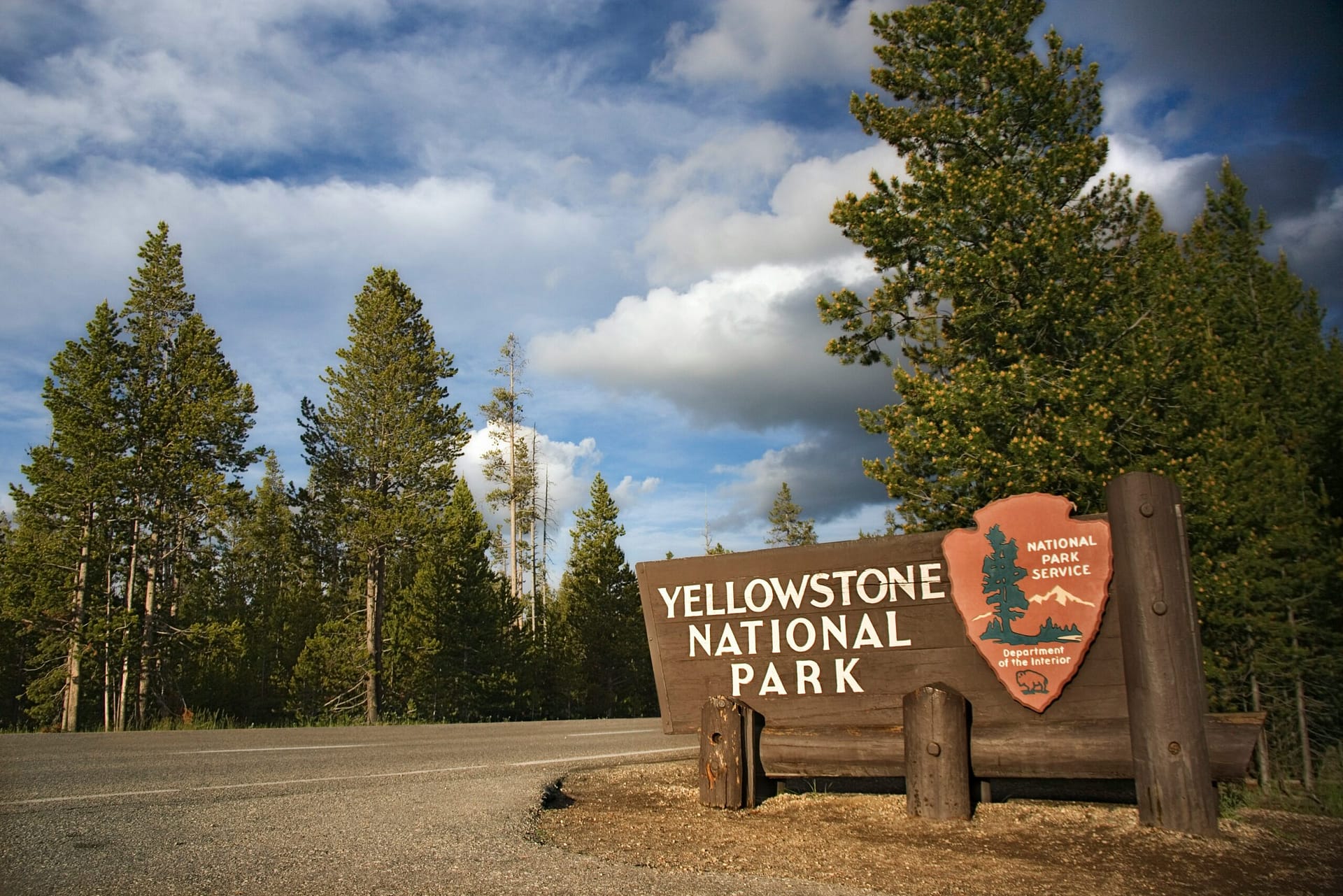
Altitude sickness in Wyoming’s oldest and most popular national park isn’t rare. On the first day, some visitors go through a creeping, awkward experience; it’s a mix climbing a lot of stairs and dealing with extreme changes in oxygen intake.
Yellowstone Elevation Sickness is usually harmless; sometimes it even goes away. But it can turn into dangerous fluid in the lungs or brain. In worsening cases, make sure the affected rests immediately, descend if you can, keep warm, and hydrate.
Read to learn more about prevention and surprise cases.
What Is Yellowstone Elevation Sickness?
Yellowstone Elevation Sickness is a result of the height of the areas of Yellowstone National Park.
It’s not actually something unique to the location.
It’s general altitude sickness- the medical term being acute mountain sickness, or AMS. This sickness happens because higher areas have less oxygen in the air than at sea level.
The body must adjust its internal chemistry because of the decrease in barometric pressure. Heart and breathing rates will rise, balancing lower oxygen saturation.
Additionally, all fluid balance shifts as the body releases more water to concentrate hemoglobin, the protein that carries oxygen. Until this is complete, physical tasks will cause discomfort.
The first day can trigger fatigue and shortness of breath while walking.
Most people become accustomed quickly as their bodies adapt to thinner air. But sometimes, it sticks and needs some light remedies.
This isn’t to be confused with altitude- the terms are related but not the same: elevation is how high the ground is above sea level, while altitude is height in the air.
“Yellowstone altitude sickness” is a term people use as informal travel speech, but what really matters is the park’s elevation, since that determines how visitors experience thinner air.
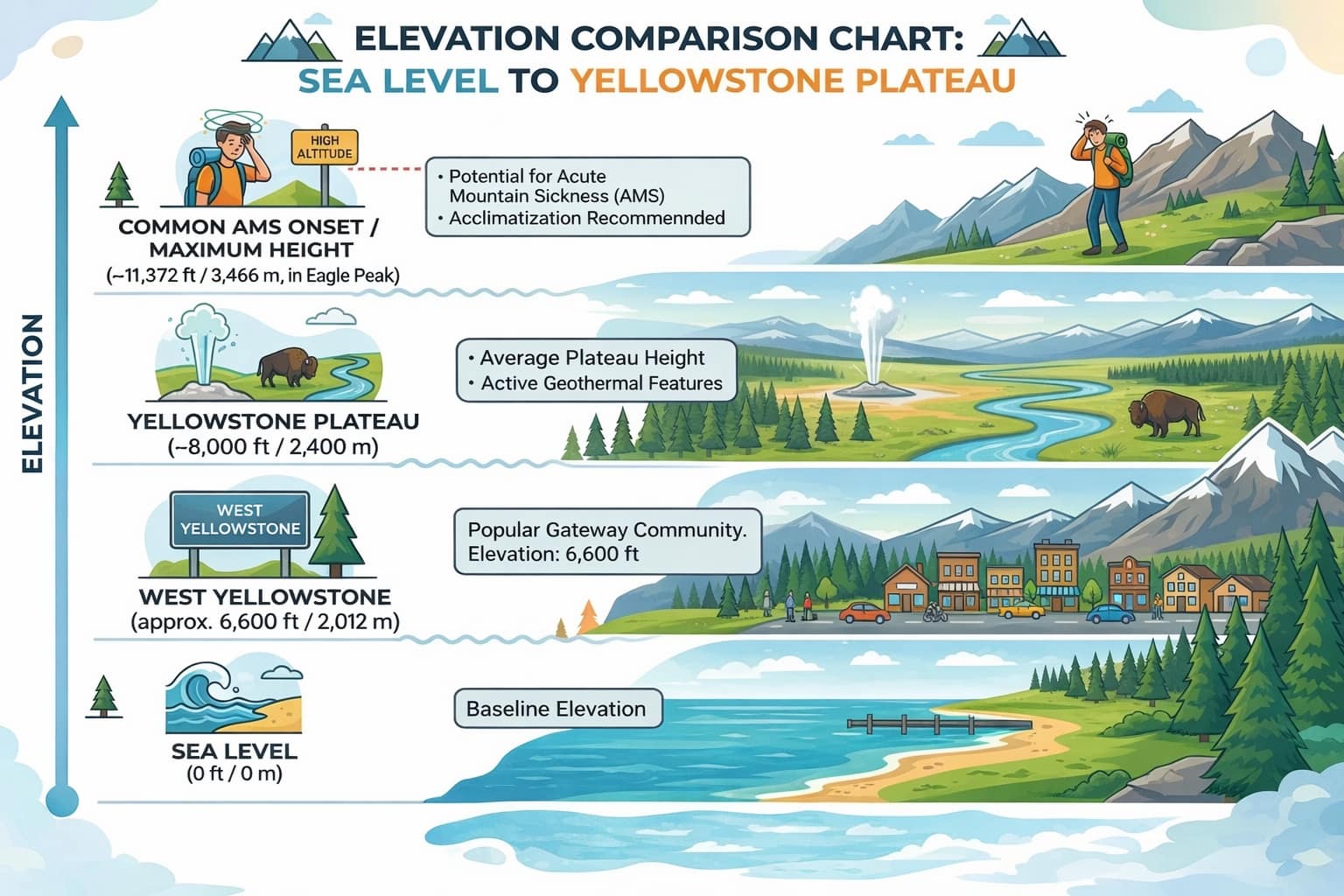
How High Is Yellowstone, Really?
Though not obvious, Yellowstone National Park is a steep mountain rang- it doesn’t seem to be so since it’s located on a wide volcanic plateau.
With mostly meadows and gentle slopes, the elevation is going to seem deceptive. If you were to jog back to your car, your lungs will start showing the difference.
The elevation will make anyone see and feel differently as they go. The atmosphere will change as you move higher. The air gets cooler and the sunlight stronger at higher spots.
Oxygen levels don’t actually drop at high altitude. The air pressure does; your lungs work harder to get the same amount with each breath.
In fact, Yellowstone’s low areas are already higher than Denver, Colorado, the “Mile-High City,” and the higher parts are similar to many ski resorts in the Rockies.
All roads and parking areas in the park lie above 7,000 feet, keeping travelers unknowingly on high ground.
How Common Is Altitude Sickness In Mountain Areas?
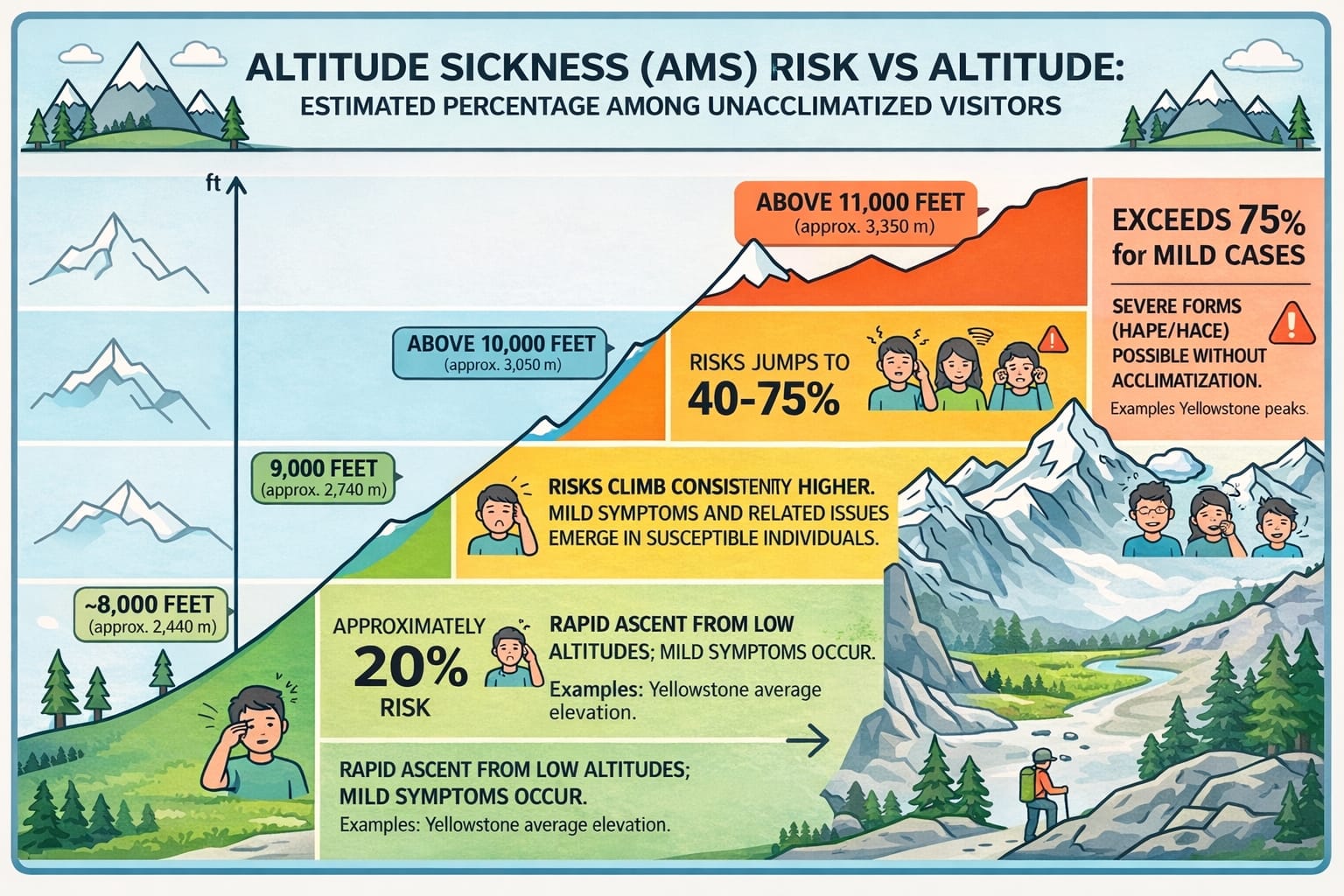
Some people notice mild altitude sickness. Most people feel fine. Studies from similar U.S. mountain parks give some perspective.
To summarize, a 38-month review of EMS records from Sequoia and Kings Canyon found 23 altitude-related cases. That’s about six cases per year, with most being mild AMS.
According to the study, there were five cases of high-altitude pulmonary edema. Nine people had to be transported to hospitals, nine were helped to descend and then released, and four were treated on-site and continued their visit.
Most altitude illnesses in the U.S. show up around 9,000 feet. However, people generally only notice a little discomfort. Serious problems do not happen often in Yellowstone.
Symptoms to Watch For Altitude Sickness
Yellowstone won’t floor most people, but it has a way of reminding you where you are.
The signs usually start small:
- Cephalalgia: A dull, nagging headache as the brain reacts to lower oxygen levels, followed by irritability.
- Fatigue: Extreme tiredness because the body expends extra energy to maintain normal oxygen delivery.
- Vertigo: A subtle feeling of imbalance caused by reduced oxygen supply to the brain.
- Dyspnea: Labored or more noticeable breathing as the lungs work harder to compensate for lower oxygen.
- Visual Disturbances: Blurred or flickering vision caused by stress on the tiny blood vessels in the eyes – this is one of the more serious altitude effects.
- Insomnia: Difficulty falling or staying asleep due to reduced oxygen levels and disrupted breathing patterns that alter normal sleep cycles.
- Malaise: A vague sense of physical unease or low energy, and altitude sickness triggers it because hypoxia disrupts cellular metabolism and nervous system signaling, leaving the body feeling weak and unwell.
The next stage includes dry coughs turning wet, a fast heartbeat or quickened breathing even at rest, getting tired easily, or frothy pink spit.
Serious But Rare Complications:
- High Altitude Pulmonary Edema: When fluid builds up in the lungs. Breathing issues are a large sign of it.
- High Altitude Cerebral Edema: Fluid buildup around the brain. Main symptoms are extreme confusion or clumsiness. About 13% to 20% HAPE cases develop into this, with emergency treatment needed.
Why Some People Get It (And Others Don’t)
There’s no telling who altitude is going to hit. The marathon runner can feel terrible while the person who never exercises feels completely normal. Here’s what’s actually behind it:
- Rapid Ascent: When driving up from low elevation instead of walking, the body is basically catching up from behind. It doesn’t get the right amount of time to get used to the change.
- Sleeping Altitude: Altitude changes hit harder at night. Breathing naturally slows with oxygen reducing, causing many to wake worse than they slept.
- Individual Biology: Adaptation speed is mostly genetic. Some people shift gears fast at altitude, others take a few days. It has nothing to do with how healthy or active you are.
- Sex and Body Type: Men are slightly more likely to deal with it on average. And carrying heavy weight makes adjusting more difficult because the body needs extra oxygen.
- Hydration and Exertion: Elevation dehydrates you even when you’re not doing much. Add real physical effort and mild symptoms can get noticeably worse in a short window.
- Fitness: Being in good shape helps with most things outdoors. Altitude sickness isn’t really one of them. The limiting factor is atmospheric pressure, and no amount of training changes that.
Usually the people who come through it fine are just the ones who took it easy early on and drank more water than they thought they needed.
How to Prevent Yellowstone Elevation Sickness
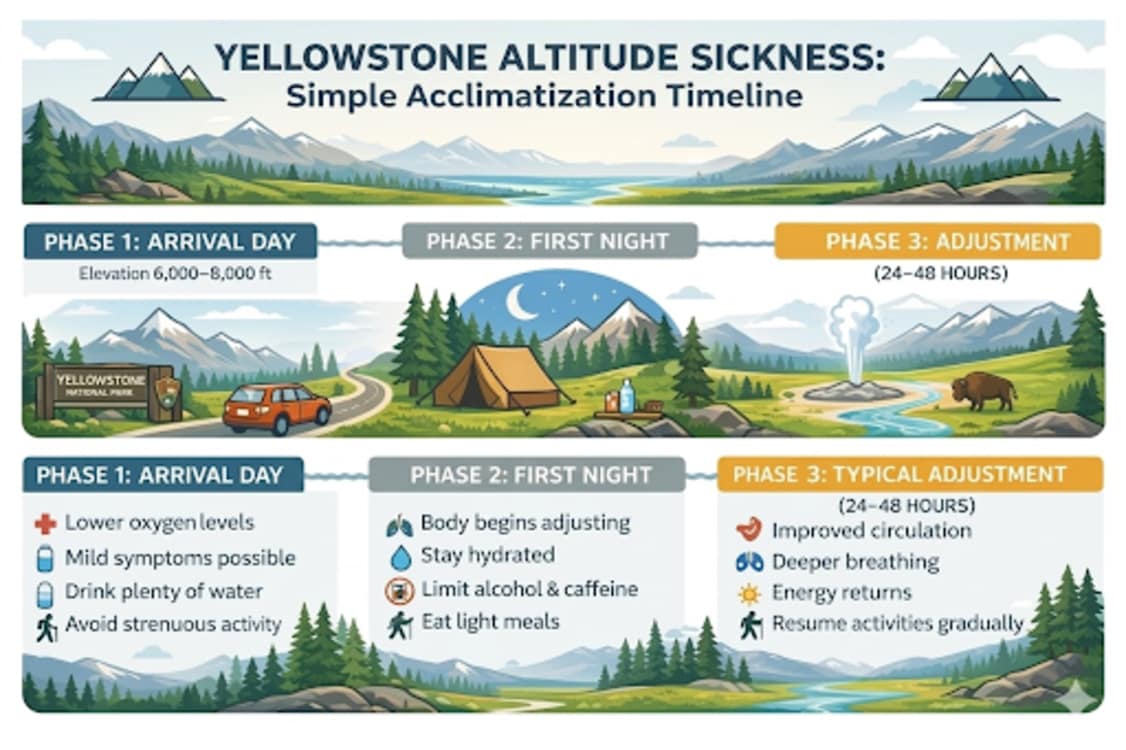
The body can handle Yellowstone’s altitude, as long as you give it time to acclimate. The body gets its functions- breathing, heart rate, and red blood cell production- up gradually.
The goal is to not get in the way of that:
- Arrive A Day Early At Lower Elevation: West Yellowstone sits a bit lower than the park interior and makes a good first night. It takes a lot of pressure off the first full day.
- Pay Attention To Sleeping Altitude: It’s important to manage the oxygen more consistently at night time, as the body processes things better when asleep. Sleeping even slightly lower can help the body acclimatize and adjust overnight.
- Drink Water Consistently: High elevation pulls water out of the body faster through breathing. That, along with the extra strain of moving, means that drinking water will go a long way towards helping the body adjust.
- Take It Easy On Day One: The body is already working to deal with higher altitude. Pushing hard will increase the chance of altitude sickness.
- Talk To A Doctor If Prone: There are medications for people who react badly to higher altitude- like acetazolamide. It’s worth asking about before the trip if that applies.
If you take time to acclimatize before doing more intense activity at high elevations, your visit to Yellowstone will be enjoyable.
What to Do If It Happens
The first 6 to 24 hours are when symptoms typically show up. The body can recover on its own at that stage. Early on, rest and hydration are enough for most people- but the window closes the longer it goes unaddressed.
- Recognize Early: Don’t mistake the symptoms for fatigue. The longer they go unaddressed the fewer options you have.
- Rest: Oxygen demand goes up with physical effort. At altitude, the body can’t always meet that demand. Stop moving and let it catch up.
- Hydrate: Faster breathing means faster water loss. Dehydration makes altitude symptoms harder to manage.
- Monitor: Heart rate and blood oxygen can both be monitored with devices- like a pulse oximeter. If there’s rapid heart rate, low oxygen, or worsening breathlessness, it’s best to give some basic treatment to the affected immediately. It could lead to fainting, or worse.
- Medication: Pain relievers are enough for headaches. Acetazolamide is good for making the body manage oxygen at altitude- but it’s prescription only, arrange it before the trip.
- Descend: A few hundred feet of elevation loss is often enough to turn things around. Improvement usually comes within hours.
- Call For Help If Needed: If there’s a sign of HAPE or HACE, call for EMS immediately. Both are emergencies.
Is Yellowstone Worth The Risk? (Based On Real Visitor Experiences)
The short answer is yes, and most visitors would agree.
Altitude affects some people on arrival- usually just tiredness or shortness of breath- but it passes within a day or two. Severe cases are uncommon, and repeat visitors are still a norm.
The risks most visitors actually run into have nothing to do with altitude.
Getting too close to bison, stepping off boardwalks near geothermal places, or not accounting for how quickly weather changes lead to actual issues.
Most people who prepare reasonably and take the first day at a slower pace have no significant problems.
The park is worth it. You’ll be fine as long as you’re a little careful.
FAQs Regarding Yellowstone Elevation Sickness
Now, let’s talk about some edge cases.
How can you recognize HACE or HAPE before it gets serious?
HACE’s biggest symptom is visible confusion or trouble walking straight. Meanwhile, HAPE has more obvious shortness of breath- the affected also gets blue lips.
How can monitoring oxygen and activity help prevent worsening AMS?
When oxygen saturation goes under 92%, the body’s going to struggle. Doing a lot of physical exertion on top of that makes the sickness worse – if you start taking things easy here, there’s less chances of the worse symptoms coming up.
Does previous high-altitude experience reduce AMS risk?
A little. Your acclimatization does not stay for long, and a fast ascent rate can still make you sick. The main benefit of experience is knowing the clinical signs for when something is not right.
When should you descend to relieve AMS symptoms?
Headache with nausea, dizziness, or shortness of breath – take a step back immediately if those come up. Even dropping 1,000 helps your physiological state.
Can cold or hot weather make AMS worse?
Yes. When cold, your body uses up energy faster to heat itself. In the heat, dehydration is likelier and your blood has a harder time moving oxygen. Both increase chances of cardiovascular stress.
How does AMS risk change over several days?
The first two days are the worst. Symptoms will be less likely to show up after, but rapid climbs can still bring them back.
Are old people more likely to get elevation sickness at Yellowstone?
Yes. With lower cardiopulmonary reserve, the body has more problems. Heart problems or COPD increase the chances, and slightly low baseline oxygen makes high altitude harder to tolerate for such people.
Are children at risk for elevation sickness at Yellowstone?
Yes. If they’re progressing into it, they’ll seem fatigued and be crankier. They might also vomit and suffer from rapid breathing. Rest and hydration is enough to make the symptoms lighter, but descend if needed.
Conclusion
If nothing else, remember these three basics for Yellowstone Elevation Sickness: Hydrate more than you think you need to, Sleep at a lower elevation if possible, and Stop the moment a headache turns into nausea.
Yellowstone’s beauty is worth the effort your lungs have to put in.
As long as you don’t treat the first day like a marathon, the park’s thinner air will be nothing more than a footnote in your travel journal.

Hi, I’m Bruno. I’ve worked in the aviation industry for over 6 years as a B1.1 Licensed Aircraft Maintenance Engineer. This blog is where I share insights on aviation and travel globally.