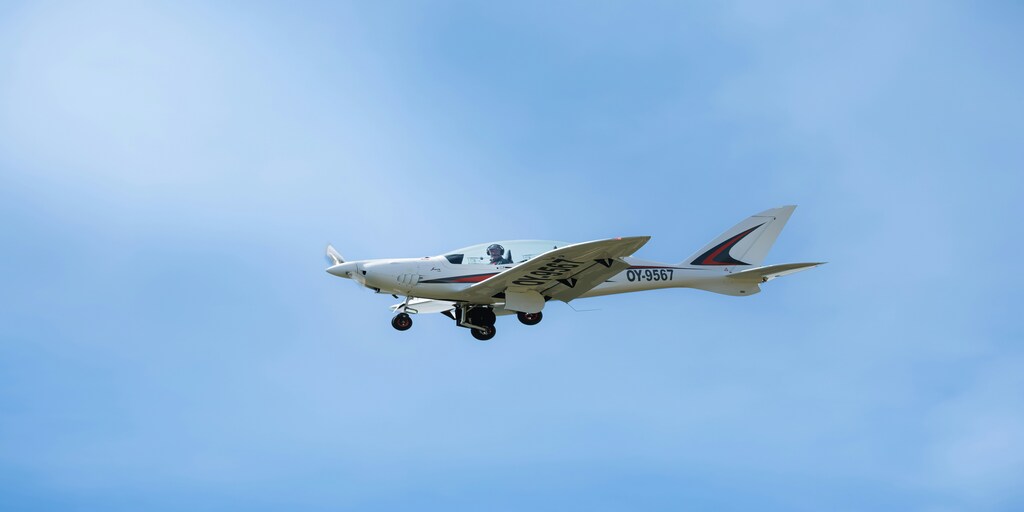
In 2026, a private pilot license in the US costs a median of more than $16,000. Going from zero experience to airline-ready costs $100,000 to $180,000 almost everywhere in the world. The bill is high for four reasons:
- You pay by the hour for an expensive machine plus a person. A training aircraft rents for about $180 an hour in the US, and an instructor adds $60–$90. Fuel is only about a third of the rental. Maintenance, insurance and the cost of the aircraft itself make up most of the rest.
- Regulation sets the number of hours. A commercial license needs 250 hours, but US airlines need 1,500 before they can hire you.
- Shortages make every hour dearer. There aren’t enough instructors, examiners or new training aircraft to meet record demand.
- Almost everyone flies more than the minimum. Most students need 50–70 hours for a private license, not the advertised 40, which adds about $7,000.
The good news: you can’t change hourly rates much, but you can change the structure of how you pay. The right route, flying frequently, refusing to prepay big sums and stacking free money can cut tens of thousands from the total. This guide shows where every dollar goes and exactly how to bring the number down.
How much each pilot license costs in 2026
The private license is the most expensive single step. Each rating after it adds $4,000–$11,500, and examiner fees come on top of every one.
| License or rating | Median cost (USD, 2026) | What it lets you do |
|---|---|---|
| Private pilot (PPL) | $16,000+ | Fly for fun, carry passengers, no pay |
| Instrument rating (IR) | ~$11,500 | Fly in clouds and low visibility |
| Commercial pilot (CPL) | ~$10,000 | Get paid to fly |
| Flight instructor (CFI) | ~$5,500 | Teach, and build hours while earning |
| Each CFI add-on (CFII, MEI) | ~$4,000 | Teach instrument or multi-engine |
| Stacked total, PPL to CFI | ~$43,000+ | Before examiner fees and overruns |
That $43,000 is the low end. It assumes you finish each step close to the median, pay as you go at a local school and live at home. A structured zero-to-airline program, such as ATP Flight School’s at $123,995 plus about $12,000 in examiner and test fees, costs more. In exchange you get a fixed price, daily flying and a faster finish.
Prices are still rising. Redbird’s average private license cost was $14,000 in March 2024, already about $1,500 higher than in 2023.
Where your money goes in one hour of flight training
A dual lesson in a Cessna 172 costs a US student about $240–$270 an hour: roughly $180 for the aircraft and $60–$90 for the instructor. Most people assume fuel is the big expense. It isn’t. Here is an estimated split of that $180 aircraft rental, using May 2026 fuel prices from Flying magazine:
| Part of a ~$180/hr rental | Approx. cost per hour | Share |
|---|---|---|
| Fuel (8–9 gal/hr at $7.22/gal avgas) | $58–$65 | ~33% |
| Engine overhaul reserve | ~$17.50 | ~10% |
| Propeller reserve | $3–$7 | ~3% |
| Maintenance, insurance, hangar, aircraft cost, overhead, profit | $95–$100 | ~55% |
That last line is the one nobody sees. Three things inflate it:
- Inspections every 100 hours. US rules require a 100-hour inspection on any aircraft used for paid instruction. A busy school plane flying 600–1,000 hours a year gets six to ten of them, plus constant brake, tire and landing-gear wear from student landings.
- Insurance. Flight schools rank insurance alongside maintenance and examiner availability as their top cost pressures.
- The aircraft itself. New trainers cost several hundred thousand dollars, and schools must finance or depreciate that price over every hour flown.
The instructor fee hides a markup too. Students pay $60–$90 an hour, while instructors earn about $25–$40 an hour starting out and $45–$55 on average. The gap covers the school’s overhead, taxes and margin. It also means instructors are underpaid, which feeds the shortage covered below.
Why nobody finishes in 40 hours
Flight school quotes advertise the legal minimum. You pay for reality. The FAA minimum for a private license is 40 hours, but most US students finish in 50 to 70. One 2026 analysis by AeroCorner compared a 40-hour quote of about $12,700 with a typical 65-hour path of about $19,700. That’s $7,000 more than the quote. At roughly $250 per dual hour, every 10 extra hours adds $2,500.
Some causes are in your control:
- Flying once a week or less. You spend part of each lesson relearning the last one. AOPA recommends about three lessons a week.
- Weak preparation. Arriving without having studied the maneuver means paying $250 an hour to learn on the ground what a book could have taught.
- Failed checkrides. A retest means more lessons and another examiner fee.
Others aren’t:
- Instructor turnover. Redbird found at least 83% of active students had trained with more than one primary instructor, and 32% trained without a formal syllabus. Every handover costs repeat lessons.
- Weather and maintenance. Grounded aircraft and bad-weather weeks break your rhythm.
- Waiting for an examiner. You fly “keep current” hours while you queue for a checkride slot.
This is why fixed-price, accelerated programs look expensive but can be a fair deal. Part of what you buy is protection from overrun hours.
The real reason: the system is short on everything it needs
Flight schools aren’t getting rich. Instructors are underpaid and schools close regularly. Training is expensive because it runs on scarce inputs (examiners, instructors and aircraft), and record demand is pressing on all of them. In 2025 the US had 370,286 student pilots and issued a record 33,262 private licenses.
The 1,500-hour rule turns 1,250 hours into an apprenticeship
A US commercial license needs 250 hours, but an airline first officer needs 1,500. That rule was introduced after the 2009 Colgan Air crash. Reduced “restricted ATP” minimums under 14 CFR 61.160 apply to some pilots:
- 750 hours for military pilots
- 1,000 hours for graduates of an approved aviation bachelor’s degree (60+ aviation credits)
- 1,250 hours for an associate’s degree, or a bachelor’s with 30–59 aviation credits
Most pilots build those hours as paid instructors, not out of pocket. So the real cost of the rule is one to two years of low pay while loan interest grows. Europe has no equivalent rule: an integrated graduate can join an airline with about 200 hours.
Instructors leave as fast as they qualify
FAA advisory data put instructor turnover near 90% a year, with an average stay of about 14 months. That data is from 2019, the most recent available. The reason is simple: a full-time instructor earns about $55,000–$65,000, while a first-year regional airline pilot earns $90,000 or more. Instructors are time-builders on their way out, and students pay for each handover.
Examiners are a bottleneck nobody prices
Every checkride needs a Designated Pilot Examiner. In 2025 each examiner handled a median of about 100 applicants, and 52% charged $800–$1,000 per checkride. AOPA reported backlogs of 3–4 months and six states with six or fewer examiners. The FAA doesn’t cap examiner fees, and rescheduling usually means paying again.
Schools fly 40-year-old aircraft because new ones barely exist
The world’s manufacturers delivered only 1,782 piston airplanes in 2025, including just 191 Cessna 172s, 188 Piper PA-28s and 81 Diamond DA40s. That can’t renew a fleet of tens of thousands of trainers. Older aircraft need more maintenance, and scarcity keeps used-aircraft prices high.
A fuel shock is coming
Piston trainers burn leaded avgas. US law requires airports to keep selling it until 2030. The only maker of its lead additive plans to stop around 2028–29, and no unleaded replacement has finished FAA testing. Fuel is a third of the rental rate, so any price jump goes straight to students. Electric trainers aren’t a fix yet. A Pipistrel Velis Electro uses about $3 of electricity an hour, but costs about $229 an hour all-in because of expensive battery replacements.
Hidden costs that aren’t in the quote
Advertised tuition usually understates the real total by 15–45%. Before you sign, ask whether each of these is included:
- Examiner and test fees. About $12,000 across a full US zero-to-instructor pipeline.
- Living costs. £20,000–£28,000 over a UK integrated course, and far more if you relocate to an expensive city.
- Theory exams. The EASA ATPL has 14 subjects. UK students sitting both UK and EASA exams pay £1,900–£2,400 in exam fees, plus £5,000–£7,000 for dual licensing.
- Type rating. €15,000–€40,000 in Europe when the airline doesn’t include it.
- License conversion. $2,000–$12,000 if you train in one country and work in another. It can also add months.
- Unpaid waiting time. UK graduates often sit in a 3–6 month “holding pool” before an airline starts them.
- Gear and admin. Headset, books, medical certificate, written exams and an iPad with aviation apps.
None of these is optional. Build every line into your budget from day one.
Flight school costs by country and route
The total to reach an airline is similar almost everywhere. What changes is how it splits between tuition, living costs and post-license hour-building. Figures are 2025–2026; aggregator estimates are marked.
| Route | Headline cost | What to know |
|---|---|---|
| US, pay-as-you-go (PPL to CFI) | ~$43,000+ | Cheapest in cash, but you still need ~1,250 more hours before an airline job |
| ATP Flight School (US) | $123,995 + ~$12,000 fees | Fixed price, fast; you then instruct to 1,500 hours |
| University of North Dakota degree | $104,207 flight fees, before tuition | Degree cuts airline minimum to 1,000 hours |
| UK integrated ATPL | £124,500–£168,400 all-in | Includes living costs and dual UK/EASA licensing |
| UK modular | £48,000–£90,000 | Slower (2–4 years), you assemble it yourself |
| BAA Training (Lithuania/Spain) | €85,500 | Excludes housing, exams and type rating |
| Western European airline academies | €100,000–€180,000 (aggregator estimate) | Type rating often extra |
| Emirates Flight Training Academy, international student | $181,650 | Includes housing and meals; no job guarantee |
| Etihad Flight College / Alfa Aviation (UAE) | AED 350,000–500,000 (~$95k–$136k, aggregator estimate, undated) | Confirm current price directly |
Two patterns stand out.
The US is cheaper in cash, but slower to a paycheck. A European integrated graduate goes to an airline with about 200 hours. A US graduate must still build roughly 1,250 hours, usually as an instructor.
In the Gulf, price depends on your passport. Nationals are usually sponsored and often paid a salary during training. Qatar Airways’ cadet program, for example, is open to Qatari nationals in exchange for a five-year commitment, and UAE nationals train under Emirates’ bonded scheme. International students pay some of the highest headline prices in the world.
Training abroad in South Africa, the Philippines, New Zealand or Czechia can cost $35,000–$55,000 to commercial level, according to one aggregator. Those figures are unverified. Converting the license back home costs $2,000–$12,000 and months of extra time. Converting an FAA license to EASA means sitting all 14 EASA theory exams.
Is flight training worth the cost?
For many US pilots, yes. A $100,000 investment can be repaid within a few years of reaching an airline. The risk is timing, and it sits almost entirely with the student.
The pay side. US regional first officers earn about $92–$99 an hour in year one, roughly $80,000–$110,000 a year. Upgrade to captain can come in about two years, and regional captains earn $140,000–$230,000. Sign-on and retention bonuses have reached $100,000 or more at some regionals. On those numbers, clearing $100,000 of debt in three to five years at an airline is realistic. Add the one to two years of instructing it takes to get there.
Europe is less generous. Average pilot pay ranges from about €32,000 in Romania and €50,000 in Poland to €77,000 in Spain and €114,000 in Switzerland. A self-funded pilot in Southern or Eastern Europe can carry similar debt on half the pay. The cheapest place to train isn’t always the easiest place to repay.
The borrowing side. Sallie Mae’s Airline Career Loan charges 2.19%–17.79% fixed APR over up to 15 years. At 10% over 15 years, a $100,000 loan costs about $1,075 a month and about $93,000 in total interest.
The timing risk. Airline hiring swings. The major US airlines hired just over 3,600 pilots in the first half of 2024, against 6,509 a year earlier, mainly because aircraft deliveries were late. Hiring recovered in late 2025, and for 2026 United planned about 2,500 hires and American about 1,500. Getting from zero to an airline-eligible job takes 1.5–3 years in the US, about the length of a hiring cycle. If you start at a peak, you can finish in a trough. Long-term demand still looks strong: Boeing forecasts 660,000 new pilots needed worldwide from 2025 to 2044.
How to make flight school affordable: 7 moves that actually work
No single trick makes flight training cheap. What works is choosing a cheaper structure, then stacking savings on top. These moves are ordered by how much money is at stake.
1. Choose the route that gets you paid soonest
This is the biggest decision you’ll make.
- Military. Training is free and you’re paid a salary, but the US Air Force and Army require 10 years of service after you earn your wings.
- An approved aviation degree. It cuts the US airline minimum from 1,500 to 1,000 hours. That saves six to twelve months of instructing and opens campus financial aid.
- A fully funded airline scheme. They exist but are rare. British Airways funded up to 200 Speedbird cadets in 2025 with a £21 million fund, and an earlier intake drew more than 20,000 applicants for about 100 places.
- An income-share model. Lufthansa’s European Flight Academy asks €10,000 upfront. The remaining €110,000 is repaid as 11% of gross income for 11 years, starting only once you earn over €30,000 a year. The airline shares the hiring risk, but if you leave the group and earn well, you can repay more than the loan.
- Sponsorship for nationals. If you hold a Gulf passport, check your national carrier first. Sponsored programs often pay tuition and a salary in exchange for a service bond.
Be careful with US “cadet programs.” Most give you a conditional job offer, not funding, and you still pay $89,000–$125,000. Several now require 24 months as a regional captain before you move to the major airline.
2. Fly three times a week
Overrun hours are the biggest cost you control, worth about $7,000 on a private license alone. Fly often, keep one instructor if you can, and insist on a written syllabus. Study each lesson on the ground before you pay for it in the air.
3. Use simulators for everything they’re allowed to count for
A basic simulator costs about $20 an hour and an advanced one about $75, against $180 for the aircraft. Use them to practice procedures, instrument work and emergencies, and log every hour the rules allow.
4. Train somewhere cheaper, but count the whole cost
Eastern European integrated courses list at €79,990–€85,500, about 25–35% below UK prices. Spain’s EAS Barcelona offers a modular commercial, multi-engine and instrument package for €32,500 in 2026. Before you go, add up living costs, visas, travel and license conversion. Low-cost countries only save money if the license works where you plan to fly.
5. Test the waters with a cheaper license
Under the FAA’s MOSAIC rule, in force since October 22, 2025, sport pilots can fly four-seat trainers like the Cessna 172. Up to 2.5 simulator hours count, and the training credits toward a private license. It’s a cheaper way to be sure before you borrow six figures.
6. Stack every source of free money
- Scholarships. The AOPA Foundation awarded a record $2.2 million in 2026, averaging $6,500, including 115 private-pilot awards of $12,000 for high-school students and teachers. Also look at EAA, Women in Aviation International, the Ninety-Nines, OBAP and the Royal Aeronautical Society. Apply to many: small awards add up.
- GI Bill. The Post-9/11 GI Bill pays in-state costs with no dollar cap at public-university aviation degrees. Standalone flight schools are capped at $17,097.67 a year, and you need a private license first.
7. Get paid to build hours, then collect airline bonuses
Becoming a flight instructor turns the gap to 1,500 hours into paid work. Once you join a regional airline, tuition reimbursement and bonuses can recover a big share of your costs. Current examples include Republic ($25,000), CommuteAir ($20,000), Horizon ($12,500), and Envoy, PSA and Piedmont ($7,500 each).
How to protect your money from a school closing
Never prepay more than you can afford to lose. Flight schools close suddenly, and students who paid upfront usually lose that money.
In 2026, Piston Aviation near St. Louis shut its doors. One student had prepaid about $90,000, funded by a home-equity loan, and had logged just 35 hours. The FAA doesn’t regulate prepaid tuition, so students in this position are unsecured creditors. Similar collapses have hit students in Virginia and at Tayside Aviation in Scotland. Even airline-owned schools aren’t risk-free: in 2025, 29 former United Aviate Academy students sued, alleging overcrowding and expulsions of students carrying large debts. United said it stood behind the program.
Before you pay anything:
- Pay as you go, or in small blocks you could afford to lose
- Pay by credit card so you keep the right to dispute charges
- Read the refund and cancellation clauses in the contract
- Talk to current students about delays, aircraft availability and instructor turnover
- Ask how many aircraft and instructors the school has per student
- Check how long students wait for a checkride
A block-time discount of a few dollars an hour isn’t worth risking tens of thousands.
Flight training cost FAQ
How much does it cost to become an airline pilot?
Usually $100,000–$180,000 from zero experience, depending on country and route. In the US, a fixed-price program like ATP’s costs about $124,000 plus around $12,000 in fees. A UK integrated course costs £124,500–£168,400 including living costs.
Why is flight training so expensive?
You pay by the hour for an expensive aircraft and an instructor. Regulations set how many hours you need, and shortages of instructors, examiners and new aircraft push prices up. Most students also fly 25–75% more hours than the legal minimum.
How much does a private pilot license cost?
The US median is more than $16,000 in 2026. Realistic budgets run $15,000–$20,000, because most students need 50–70 hours rather than the 40-hour minimum.
Can I get flight training for free?
Yes, through military service (with a 10-year commitment in the US Air Force and Army), a fully funded airline cadetship such as BA’s Speedbird Academy, or a national-carrier sponsorship if you hold that country’s passport. Free places are extremely competitive.
Can I use student loans for flight school?
Yes. Specialist lenders like Sallie Mae offer aviation loans at 2.19%–17.79% fixed APR. Enrolling in an aviation degree at a college can also open federal financial aid and the uncapped GI Bill tier.
Is it cheaper to train outside the US or UK?
Often, yes. Eastern European integrated courses cost around €80,000–€86,000. But living costs, license conversion and exam requirements can cancel out the savings, so compare full totals.
What’s the fastest way to cut my flight training costs?
Fly at least three times a week and study every lesson before you fly it. That alone can save thousands in repeated lessons.
The bottom line
Flight training isn’t expensive because schools are greedy. It’s expensive because it runs on scarce aircraft, instructors and examiners, and because students carry nearly all the risk. Hourly rates are hard to change. What you can change is who carries that risk and how long it takes you to get paid.
Pick a route that shortens the path to a paycheck. Fly often so you finish near the minimum hours. Never prepay what you can’t afford to lose. Then stack scholarships, GI Bill benefits and airline bonuses on top. Do those things and a $150,000 dream can become a manageable investment.

Hi, I’m Bruno. I’ve worked in the aviation industry for over 6 years as a B1.1 Licensed Aircraft Maintenance Engineer. This blog is where I share insights on aviation and travel globally.