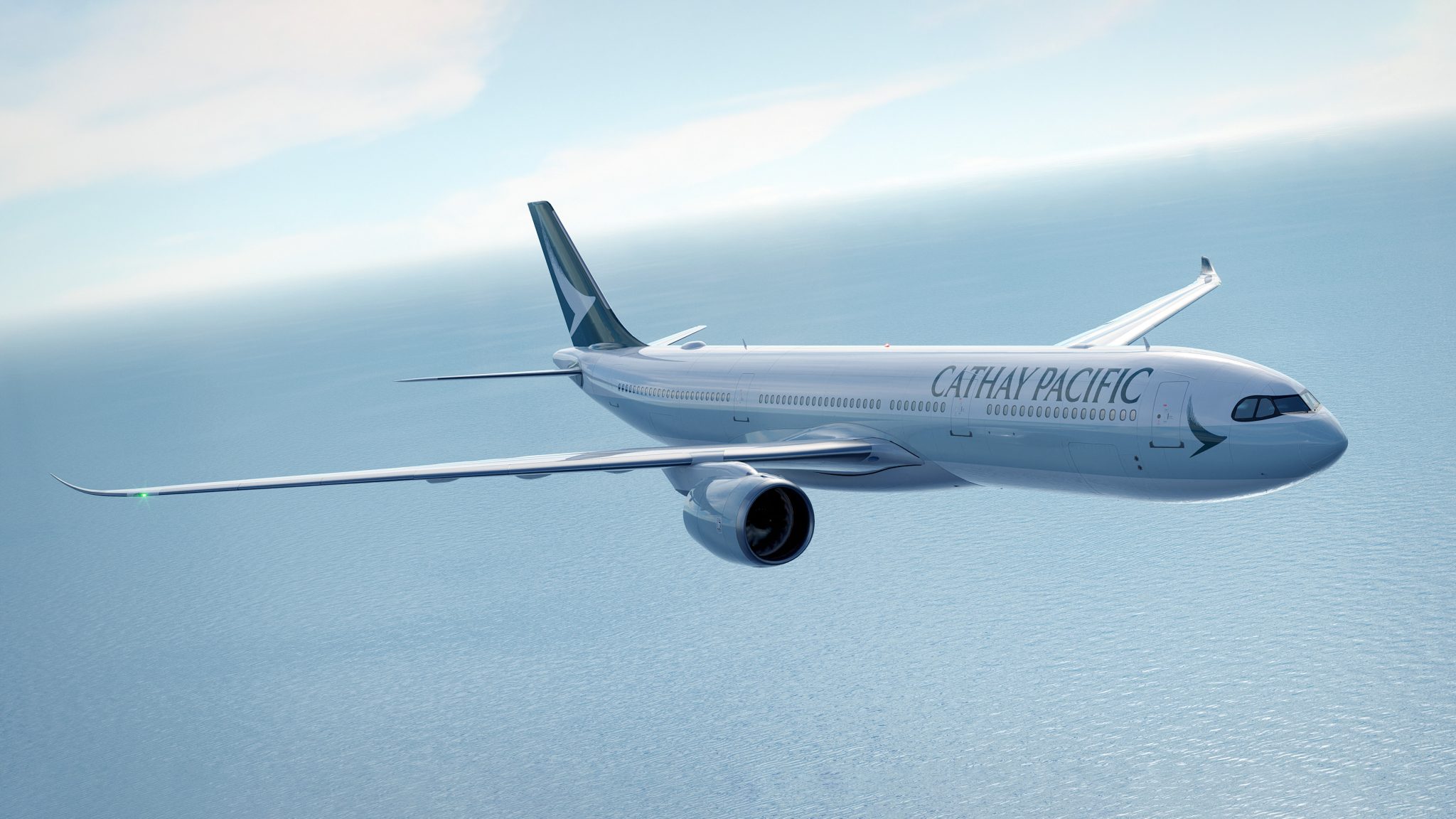
Cathay Pacific’s parent group ordered 14 more Airbus aircraft on 11 November 2026: 11 A330-900s (A330neo) and three A321neos. The 11 A330neos carry a basic price of about US$5.1 billion (HK$39.9 billion) before discounts. They arrive between 2031 and 2035.
The order lifts Cathay’s firm A330neo commitment from 30 to 41 aircraft. The A330neos are for Cathay Pacific’s regional routes, and trade press reports the A321neos are for low-cost arm HK Express. Cathay did not disclose a price or delivery dates for the A321neos, or the discount it received.
The rest of this article explains what the order costs, what Cathay is getting, why it bought now and what could go wrong.
The order at a glance
| Item | Detail |
|---|---|
| Announced | 11 November 2026 |
| Aircraft | 11 Airbus A330-900 and 3 Airbus A321neo |
| Type of deal | Firm order, reported as exercised purchase rights from 2023 and 2024 agreements |
| Basic price | About US$5.114 billion (HK$39.889 billion) for the 11 A330-900s |
| Price actually paid | Not disclosed; Cathay cites significant price concessions |
| A330-900 deliveries | 2031 to 2035 |
| A321neo price and deliveries | Not disclosed |
| Operators | Cathay Pacific (A330-900) and HK Express (A321neo, per trade press) |
| A330-900 engines | Rolls-Royce Trent 7000 |
| Firm A330-900s after the order | 41 (up from 30) |
| Group deliveries scheduled from 2026 | 120 aircraft |
Sources: Airbus
How much does Cathay Pacific’s new Airbus order cost?
The 11 A330-900s have a basic price of about US$5.114 billion, or HK$39.889 billion, according to reports of Cathay’s stock exchange filing. That works out to roughly US$465 million per aircraft. Cathay will pay less than that, but nobody outside the deal knows how much less.
Why the real price is lower than the headline
Airlines almost never pay the basic price. Cathay’s filing says Airbus granted significant price concessions, and the actual consideration is confidential. Large customers commonly negotiate steep discounts, so treat US$5.1 billion as a ceiling, not a bill.
Why these jets look pricier than the 2024 batch
Cathay’s 2024 order for 30 A330-900s had a reported basic price of about US$11 billion, or roughly US$367 million each. The new batch comes out about US$100 million higher per aircraft on the same measure. No source explains the gap. The likeliest reason is price escalation, because these aircraft deliver up to nine years from now.
What we don’t know about the cost
- The A321neo price. No figure was reported for the three single-aisle jets.
- The discount. Neither Cathay nor Airbus disclosed it.
- The financing. No source describes how these 14 aircraft will be funded.
- Payment timing. Secondary outlets report instalments spread before and at delivery, but this is not confirmed for the new aircraft.
How the order fits Cathay’s total spending
Cathay says its committed investment for 2026 to 2035 now exceeds HK$150 billion. That figure covers aircraft, cabins, lounges and digital projects together. It stood at “well over HK$100 billion” in March 2026, so the plan has grown by about half in eight months.
What exactly did Cathay Pacific order?
Cathay ordered two aircraft types for two different jobs: a regional widebody for Cathay Pacific and a single-aisle jet for HK Express. Both tranches are reported as purchase rights from older deals being turned into firm orders, not a fresh competition between Airbus and Boeing.
11 Airbus A330-900s for Cathay Pacific
The A330-900 is the larger member of the A330neo family and uses Rolls-Royce Trent 7000 engines. Cathay will fly it mainly on regional Asian routes. Operations chief Alex McGowan also pointed to the type’s ability to cover longer flights.
These aircraft come from the August 2024 agreement, which paired 30 firm A330-900s with rights to 30 more. Cathay has not yet received its first A330neo, and it has not published cabin layouts or route plans for the type.
3 Airbus A321neos for HK Express
The three A321neos add to a 2023 order for 32 A320neo-family aircraft. Trade press reports they are for HK Express, serving mainland China and other short-haul markets. The engine supplier for these three was not stated.
What is not in the order
The deal includes no A350s and no freighters. It is also separate from two other recent Cathay orders that are easy to confuse with it:
- August 2025: 14 Boeing 777-9s, which shares the number 14.
- May 2026: two more A350F freighters, taking that order to eight.
Why did Cathay Pacific order more aircraft now?
Cathay ordered now to secure Airbus production slots for the 2030s, replace ageing A330-300s and grow its Hong Kong hub. The first two reasons are stated or documented. The slot argument is analysis, but the evidence for it is strong.
Its A330-300s are getting old
Cathay Pacific flies 43 A330-300s with an average age of 18.2 years. With 41 A330-900s now on firm order, the airline is close to replacing them one for one. Cathay has not promised a one-for-one swap, so some of the new jets could add capacity instead.
A330neo delivery slots are scarce
Airbus delivered only 13 A330s in the first nine months of 2026 and does not expect to build five a month until 2029. Other buyers are filling the line: lessor CIT ordered 35 A330-900s in October, and China Eastern took 25 in June. An airline that waits risks deliveries slipping past 2035.
Hong Kong has room to grow
Hong Kong’s three-runway system is designed for 120 million passengers a year by 2035. The airport handled 65.4 million in the 12 months to September 2026. The runways are ready, so the limit on growth is how many aircraft the home carrier can put on them.
It is not a fix for today’s delivery delays
Cathay’s first Boeing 777-9 is due by the end of 2027 and its A350F freighters are running about six months late. Aircraft that arrive from 2031 cannot fill that gap, and no coverage links this order to those delays. Cathay is covering the near term by refitting existing A330s and 777-300ERs with new cabins.
Can Cathay Pacific afford it?
Yes, on current numbers. Cathay earned HK$6.24 billion in the first half of 2026, up 71% on a year earlier, and its debt sits well inside its lending limits.
| Measure | Full year 2025 | First half 2026 |
|---|---|---|
| Revenue | HK$116.8 billion | HK$68.1 billion |
| Attributable profit | HK$10.83 billion | HK$6.24 billion |
| Net debt to equity | 0.78 times | 0.81 times (covenant limit 2.0) |
| Unrestricted liquidity | HK$25.4 billion | HK$23.6 billion |
The bigger bills come later. Cathay had 105 aircraft on firm order at 30 June 2026, and 97 of them arrive in 2027 or after. In August 2026 management set a ten-year plan for 150 new aircraft, split evenly between growth and replacement, and a fleet of about 300. With 120 deliveries now scheduled, at least 30 more aircraft are still to be ordered.
Airbus vs Boeing: did Boeing lose this order?
No. Boeing was not competing for it. Cathay picked the A330neo for regional widebody renewal back in 2024, and its chief executive has ruled Boeing out for HK Express narrowbodies. This order simply adds to those earlier choices.
| Aircraft | Maker | Firm commitment | Role at Cathay |
|---|---|---|---|
| A330-900 | Airbus | 41 | Regional widebody, replaces A330-300 |
| 777-9 | Boeing | 35 | Long-haul flagship, first delivery due by end of 2027 |
| A320neo family (2023 deal) | Airbus | 35 ordered, some already delivered | Short-haul for Cathay Pacific and HK Express |
| A350F | Airbus | 8 | Freighter, replaces 747-400ERF |
By units, Cathay’s order book is now roughly 70% Airbus. Boeing keeps the most prestigious slot, the long-haul flagship, but the 777-9 is still not certified. Boeing told investors in October 2026 that first delivery remains targeted for 2027.
For Airbus, 14 aircraft is a small number against a backlog of more than 9,300. The value is in the A330neo programme, where a premium Asian airline has raised its commitment by more than a third before flying the type.
No source ties Cathay’s choice to tariffs or geopolitics, so that motive should not be assumed.
What are the risks and problems with this order?
The main risks are that today’s strong fares fade, that HK Express cannot fill more seats, and that deliveries slip. None of them threatens the order itself, but each could make it look expensive in hindsight.
- Profits rest on high fares. First-half 2026 passenger yields rose 9.4% and cargo yields 18.1%, helped by Middle East disruption sending transit traffic through Hong Kong. Those conditions will not last forever.
- HK Express is the weak spot. It lost HK$73 million in the first half of 2026 and filled only 67.5% of its seats in September while growing capacity about 10%. The three A321neos are the part of the order most exposed to weak fares.
- Fuel is expensive. IATA halved its 2026 airline profit forecast to US$23 billion in June, with jet fuel averaging US$152 a barrel. Costly fuel hurts margins now, though it also strengthens the case for retiring older A330-300s.
- Deliveries can slip. Airbus needed 249 deliveries in November and December to hit its 2026 target, and Cathay’s 777-9s and A350Fs are already late.
- Rivals are buying the same aircraft. China Eastern, Air China and the China Southern group all placed large Airbus orders in 2026, and Guangzhou is competing for the same transfer passengers.
Chief executive Ronald Lam has added his own caveat: the 150-aircraft plan depends on favourable market conditions.
What does the order mean for passengers?
Nothing changes for passengers before 2031, when the first of these 11 A330-900s is due. Over time, travellers on Cathay Pacific’s regional routes should see newer aircraft in place of A330-300s that are now about 18 years old.
Cathay has not announced cabin layouts, seat counts or routes for the A330-900. Its first A330neos, from the 2024 order, will show what the product looks like before this batch arrives. Until then, the visible upgrades are the new cabins being fitted to existing A330s and 777-300ERs.
Airbus says the A330neo burns 25% less fuel than previous-generation competitor aircraft. That is a manufacturer claim. The saving against Cathay’s own A330-300s has not been independently measured.
For HK Express customers, three more A321neos mean more seats on mainland China and short-haul routes, on a timeline Cathay has not yet given.
Frequently asked questions
How many A330neos does Cathay Pacific have on order?
Cathay has 41 A330-900s on firm order: 30 from August 2024 and 11 added on 11 November 2026.
When will Cathay Pacific receive the new aircraft?
The 11 additional A330-900s are due between 2031 and 2035. No delivery dates were given for the three A321neos.
How much did Cathay pay?
The basic price for the 11 A330-900s is about US$5.114 billion. The amount actually paid is lower and confidential, and no price was reported for the A321neos.
Which airline will fly the A321neos?
Trade press reports the three A321neos are for HK Express, Cathay’s low-cost carrier. The Airbus release names only the Cathay Group.
Is the A330neo replacing the A330-300?
Yes, in practice. Cathay flies 43 A330-300s averaging 18.2 years old and now has 41 A330-900s on order, though it has not committed to a one-for-one replacement.
Will Cathay Pacific order more aircraft?
Almost certainly. Its plan calls for 150 new aircraft over ten years and only 120 are scheduled, and simple subtraction suggests about 19 A330-900 purchase rights remain.
Does Cathay Pacific still buy Boeing aircraft?
Yes. Cathay has 35 Boeing 777-9s on order as its long-haul flagship, with the first due by the end of 2027.

Hi, I’m Bruno. I’ve worked in the aviation industry for over 6 years as a B1.1 Licensed Aircraft Maintenance Engineer. This blog is where I share insights on aviation and travel globally.